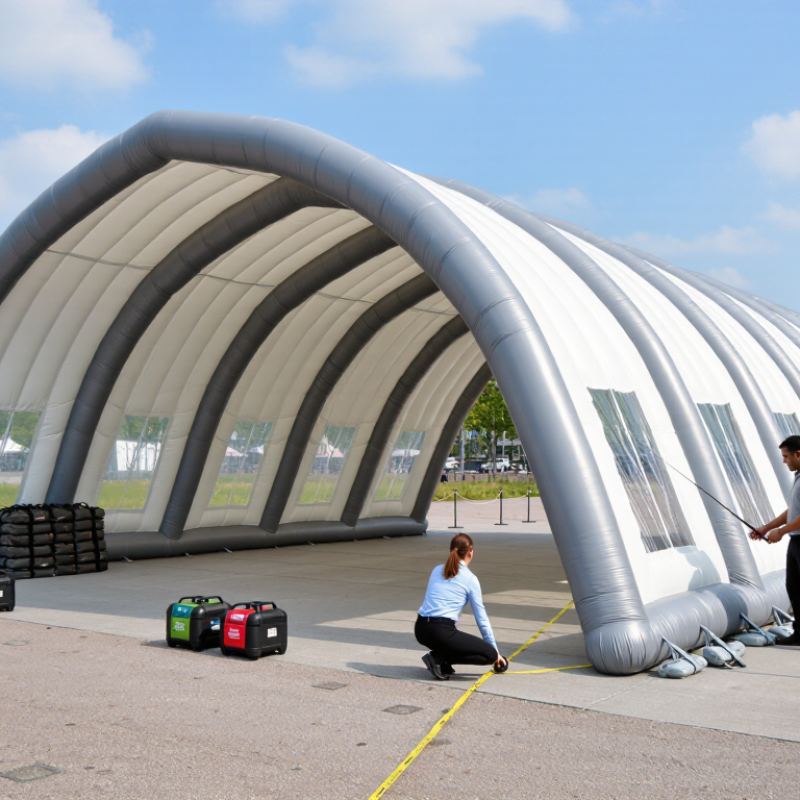
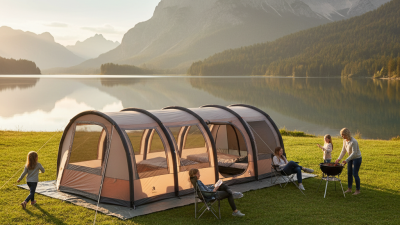
An Inflatable Tent can be a pretty practical choice for global sourcing—especially when your events keep moving between cities, climates, and venues. When it's packed down, it takes up less space, which can ease storage pressure and make transport planning a lot simpler. On site, the air beams give you a usable structure without all that heavy metal framing. Setup often needs fewer people and less time too. And that really matters when your installation window is tight.
Still, buying one shouldn't come down to nice product photos. Sourcing teams with experience will want to look at fabric composition, seam strength, valve quality, anchoring points, and how easy repairs will be. An independent inspection can check dimensions, stitching, inflation stability, and packing condition before shipment. Supplier records should spell out specs clearly, plus testing evidence, warranty terms, and support for replacement parts. Local safety rules need a close look as well—wind limits, fire performance, electrical equipment, public-use conditions, all of it.
The details are what decide reliability.
A low quote can hide costly freight or cheap accessories. A setup that sounds fast can get frustrating if the pump is undersized. Different climates can affect pressure, condensation, and how materials age. These risks can be managed, but they won't just disappear because you picked an Inflatable Tent. Buyers should ask for samples, compare total landed costs, and test the tent under realistic installation conditions. Feedback from past projects can surface problems that factory documents never mention. There's no perfect sourcing model; even careful teams can miss local ground conditions or unfamiliar venue rules. That uncertainty deserves honest planning—not vague promises. With documented quality controls and responsive communication, an Inflatable Tent can turn into a flexible, reusable asset for international exhibitions, hospitality areas, field operations, and temporary commercial spaces.
An Inflatable Tent for global sourcing is a portable shelter supported by pressurized air. It uses reinforced fabric, sealed seams, air tubes, anchors, and an electric blower. Unlike a rigid booth, it arrives folded in a compact transport bag. This reduces storage space and may simplify international freight planning. AParty Inflatable Tent can serve exhibitions, outdoor demonstrations, temporary sales areas, or product sampling events. Its shape, entrance design, ventilation, and printed panels can be adjusted for different markets. The structure needs stable airflow during use. Not every model is equally reliable.
For international buyers, sourcing should begin with technical details, not attractive pictures. Ask for fabric weight, flame-resistance documentation, seam testing, blower voltage, repair materials, and packing dimensions. A pre-shipment sample can reveal weak zippers, uneven printing, or noisy equipment. Check whether electrical components match the destination country’s approved requirements. Weather performance also matters. Wind ratings depend on anchoring, surface conditions, and correct installation. Field inspections often find that poor setup causes more problems than the tent itself. The process is not perfectly clean. A cheaper fabric may reduce cost, but it can crease easily and age faster under sunlight. Buyers should compare total landed cost, including packaging, freight, inspection, replacement parts, and local setup labor. That broader view supports more dependable purchasing decisions.
Global sourcing teams increasingly compare inflatable systems with framed shelters. The pressure is practical. UN OCHA’s Global Humanitarian Overview 2024 estimated that 299.4 million people would need humanitarian assistance. UNHCR’s Global Trends 2023 also recorded 117.3 million forcibly displaced people worldwide. These figures underline the need for shelters that move quickly, pack efficiently, and support varied field conditions.
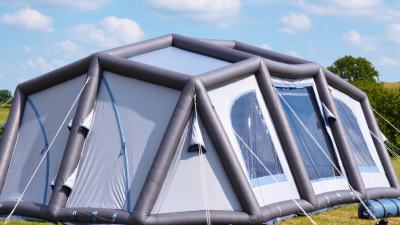
A Camping Inflatable Tent replaces many rigid poles with air beams and a compact pump. Setup can take fewer workers and less time on uneven ground. The packed load may also reduce warehouse space and transport handling.
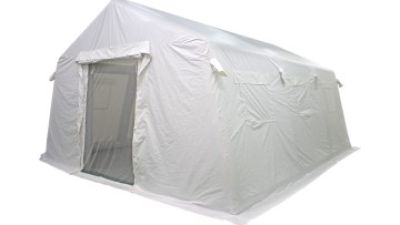
Traditional shelters often offer stronger structural familiarity and simpler visual inspection. However, they require more poles, connectors, and assembly steps.
Inflatable designs need reliable valves, pressure checks, anchoring, and puncture repair kits. Small details matter.
That sounds decisive, but it is not.
An inflatable system can fail when pumps, seams, or spare parts are poorly specified. Procurement teams should request test records for wind resistance, flame performance, waterproofing, and repeated inflation cycles. The Sphere Handbook provides recognized guidance for humanitarian shelter planning, while ISO-based quality systems support traceable production controls. Field samples should be tested by users, not only reviewed on paper. A quieter pump, clearer repair instructions, or better ventilation may matter more than an attractive specification sheet.
Buyers evaluating Inflatable Tents for global sourcing should start with operating conditions, not appearance. A model that looks spacious may feel cramped after tables, cables, and packed cartons arrive. Check usable floor area, peak height, packed dimensions, and total shipping weight. Ask for fabric specifications, seam treatment, valve design, and repair materials. These details influence setup time and field reliability. Request test reports for flame resistance, water resistance, UV exposure, and structural loading where relevant. Requirements vary by destination. Confirm documentation early.
Supply consistency matters as much as product quality. Ask about minimum order quantities, sample approval, production lead time, inspection points, and replacement procedures. A clear tolerance sheet can prevent arguments over color, stitching, window placement, or air retention. Buyers should also assess inflation equipment, power compatibility, noise, and backup options.
During a sample review, inflate the tent on the same surface used at events. Watch for uneven tension, difficult zippers, and pooling water after a controlled spray test. I have found that small handling problems become expensive when crews are tired. Still, one sample cannot predict every season. That limitation deserves honest planning.
Tips: Compare landed cost, not factory price alone. Include freight, duties, storage, assembly labor, maintenance, and disposal. Keep a written checklist with photographs and acceptance limits. Confirm whether spare valves and patches can ship with each order. Ask for references from similar climates, but verify them independently. Leave time for a second inspection. It may feel excessive, yet rushed sourcing often hides the real cost.
Material selection should begin with use conditions, not appearance. A coated polyester shell can reduce weight while supporting repeated deployment. TPU-coated fabrics often offer strong abrasion resistance and flexible performance in cold weather. Check fabric weight, coating thickness, tear strength, and seam construction. Welded seams may resist leaks better than simple stitching. However, poor welding can create weak spots. Ask for production samples, not only catalog photographs.
Safety requires practical inspection. Look for pressure-relief valves, stable anchoring points, protected air tubes, and clearly marked emergency exits. A Rescue Inflatable Shelter should remain usable if one air chamber loses pressure. Request documented tests for flame behavior, electrical safety, and structural loading. Independent laboratory reports are more reliable than unsupported supplier claims. Confirm whether testing covers the exact material and model being purchased. Small differences matter.
Weather resistance depends on more than waterproof fabric. Examine hydrostatic pressure results, UV-aging data, wind-load limits, and low-temperature flexibility. The floor should prevent ground moisture from entering during prolonged rain. Roof geometry must limit water pooling and snow accumulation. In coastal areas, corrosion-resistant fittings deserve attention. I once reviewed a shelter that passed a rain test but developed leakage after repeated folding. That experience changed my inspection process. I now request deployment cycles, repaired-sample checks, and clear maintenance instructions. No test predicts every field condition. Procurement teams should record weaknesses before approving a large order.
When sourcing an Inflatable Tent, the supplier matters as much as the design. Manufacturing capability should be tested, not assumed. Ask for seam-welding records, pressure-retention results, fabric specifications, and batch traceability. PVC-coated polyester or TPU must match climate, abrasion, UV, and repair requirements. ISO 9001 certification helps, but it does not replace factory audits. Request a live production inspection. An independent laboratory should verify flame performance and applicable destination requirements. These details protect quality when orders scale.
Capacity claims deserve careful checking. Review tooling, welding equipment, compressor testing, operator training, and subcontractor controls. Use a pilot order with measurable acceptance criteria. Check dimensional tolerances, inflation time, leakage rates, packed weight, and carton damage. UNCTAD’s Review of Maritime Transport 2023 states that over 80% of world trade by volume moves by sea. That figure makes packaging, export documentation, and port resilience practical supplier criteria. Price alone can hide freight risk. The World Bank’s 2023 Logistics Performance Index evaluates 139 economies, highlighting differences in customs, tracking, and delivery reliability.
Tips: Build a weighted supplier scorecard before requesting quotations. Include material quality, testing evidence, capacity, lead time, landed cost, and corrective-action speed. Keep photos of approved samples. A polished audit can still miss seasonal labor changes or rushed production. Recheck critical controls before every major shipment.
Practical sourcing benchmarks for evaluating inflatable-tent manufacturers and international suppliers
| Sourcing Dimension | Typical Industry Benchmark | Why It Matters for an Inflatable Tent | Supplier Evidence to Request | Buyer Evaluation Point |
|---|---|---|---|---|
| Fabric Construction | Common commercial specifications include polyester Oxford fabric from approximately 300D to 600D. Heavy-duty PVC-coated polyester is often specified at higher denier levels. | Denier, weave, coating, and fabric weight influence abrasion resistance, tear performance, weather protection, and packed volume. | Technical data sheet stating fiber composition, denier, weave, coating type, fabric weight in g/m², and tolerance limits. | Compare samples made from the same stated specification rather than judging appearance alone. |
| Water Resistance | For wet-weather applications, buyers commonly request a hydrostatic-head target of around 1,500–5,000 mm H₂O, depending on use and construction. | A higher hydrostatic-head result generally provides more resistance to rain pressure, but seam design and installation quality remain equally important. | Laboratory report using ISO 811 or an equivalent recognized test method, including the tested fabric lot. | Specify the minimum result, test method, sample conditioning, and acceptable failure point in the purchase agreement. |
| Seam and Joint Quality | High-frequency welding, hot-air welding, or carefully controlled sewn-and-taped construction may be used, depending on the fabric and air-beam design. | Air leakage, water ingress, and premature seam separation are common causes of field failure. | Welding-process specifications, seam-strength records, leak-test procedure, and photographs of internal and external joints. | Require a documented leak test for every air chamber or a clearly defined statistical sampling plan. |
| Air-Beam Performance | Many low-pressure inflatable air-beam systems operate within approximately 4–8 psi, but the correct pressure is product-specific. | Correct operating pressure affects rigidity, wind stability, pump selection, safety, and the risk of over-inflation. | Specified operating pressure, pressure-relief design, valve type, pump instructions, and inflation-time test results. | Do not compare pressure values without confirming whether they refer to the air beam, inner bladder, or pump output. |
| Wind and Anchoring System | Wind performance depends on the complete system: tent geometry, anchoring points, ballast, guy lines, ground conditions, and operating instructions. | Inflatable framing improves portability, but it does not remove the need for correct anchoring or site-specific wind limits. | Engineering calculations or test reports, stated wind limits, anchor-point load data, ballast requirements, and installation manual. | Reject unsupported claims such as “storm-proof” unless supported by a defined test method and operating conditions. |
| Fire Performance | Fire requirements vary by country, venue, and application. EN 13501-1 and local tent or event regulations are commonly referenced in procurement specifications. | Indoor exhibitions, public events, and emergency facilities may require documented flame-performance compliance before use. | A current test report identifying the exact fabric, coating, construction, and classification—not just a general certificate. | Confirm that the tested material and construction match the production version and destination-market requirements. |
| Quality-Control System | A reliable process normally includes incoming-material inspection, in-process checks, final inspection, air-leak testing, dimensional verification, and packing inspection. | A repeatable quality system reduces variation between the approved sample and mass-produced units. | Quality manual, inspection checklist, defect classification, calibration records, corrective-action procedure, and sample inspection report. | Use an agreed acceptance standard and define critical, major, and minor defects before production begins. |
| Sampling and Development | A first prototype commonly requires about 7–15 working days after artwork, dimensions, and materials are approved; complex custom designs may take longer. | Early sampling identifies fit, graphics, pressure retention, packing, and installation problems before the production order. | Sample schedule, revision policy, prototype photographs, dimensional drawings, and a signed approval sample. | Treat the approved sample as the reference standard for materials, color, dimensions, accessories, and workmanship. |
| Production Lead Time | For established designs, a typical manufacturing planning range is approximately 20–45 working days after deposit, artwork approval, and material confirmation. | Inflatable products often require coordinated cutting, welding, printing, sewing, accessory assembly, testing, and packing. | A production schedule showing material procurement, printing, assembly, inspection, rework allowance, and dispatch date. | Separate manufacturing lead time from international transit time, customs clearance, and destination delivery. |
| MOQ and Customization | Custom-order minimums vary widely; many suppliers negotiate by design, size, material, printing method, and accessory package rather than using one universal MOQ. | Low-volume buyers may face higher unit costs because cutting, printing, tooling, and setup costs are spread across fewer units. | MOQ by model and color, setup charges, tooling ownership, artwork fees, spare-parts policy, and price breaks by quantity. | Request a landed-cost comparison for sample, pilot, and full-container quantities. |
| Packing and Global Logistics | Inflatable Tents generally pack more compactly than many rigid-frame structures, but packed dimensions depend on fabric weight, air beams, pump, flooring, and accessories. | Reduced packed volume can lower storage and freight costs and make international deployment easier. | Packed size and gross weight per set, carton specification, loading plan, spare-parts carton, and shipping dimensions. | Calculate freight using verified packed dimensions rather than estimated product dimensions. |
| After-Sales Support | Commercial warranties are commonly offered for approximately 1–3 years, with coverage varying by fabric, air system, workmanship, and usage conditions. | Repairable air beams, replaceable valves, patch kits, and available spare parts can extend field life and reduce downtime. | Written warranty, excluded conditions, response-time commitment, repair instructions, spare-parts pricing, and replacement-part availability. | Evaluate total ownership cost, not only the initial purchase price. |
| Supplier Reliability | A dependable supplier should demonstrate stable production capacity, traceable materials, consistent communication, and the ability to repeat approved specifications. | Global sourcing risk is reduced when the supplier can manage technical changes, inspections, documentation, and delivery commitments systematically. | Factory audit records, production capacity, equipment list, export experience, reference samples, process flow, and business continuity plan. | Use a weighted scorecard covering quality, compliance, lead time, communication, logistics, and total cost. |
Note: The numerical ranges are practical procurement benchmarks rather than universal requirements. Final specifications should be confirmed against the destination country’s regulations, intended use, weather conditions, and an independent test report.
When sourcing an Air Tent internationally, compare the landed cost, not only the factory quotation. A low unit price can hide tooling, reinforced bags, inspection, inland delivery, and import duties. Ask for a line-by-line pro forma invoice. In my purchasing reviews, fabric weight and valve quality often changed the final decision. A heavier shell may cost more, yet reduce punctures during repeated setup. That trade-off deserves measurement, not optimism.
Logistics also shapes the real price. Packed volume matters when a shipment fills pallets before it reaches a container limit. Request carton dimensions, gross weight, loading photos, and spare-part ratios before placing an order. For remote projects, calculate delivery from the port to the actual campsite. A tent arriving late can create labor costs, canceled bookings, and hurried installation. Weather delays remain possible. I would also test one sample under ordinary handling, because spreadsheets rarely show awkward valves or unclear instructions.
Long-term value depends on maintenance, training, warranty terms, and usable service life. Check whether damaged tubes, zippers, or ground anchors can be replaced separately. A supplier should provide repair guidance, material specifications, and realistic response times. Record setup minutes with two workers, then repeat the test after several uses. The first trial may look excellent. It may not stay that way. I would score cost, logistics risk, comfort, and repairability together. That method is less exciting than chasing the lowest quote, but usually more defensible.
Emergency Inflatable Tents provide a practical shelter solution when disasters, severe weather, or humanitarian emergencies require fast and dependable support. Designed for rapid deployment, this tent can be inflated and prepared for use with minimal equipment and labor, helping relief teams establish safe spaces quickly. Its bright orange PU-coated Oxford fabric outer cover improves visibility in crowded or low-light environments, while offering strong resistance to wind and rain. The lightweight structure is easy to transport, yet robust enough for demanding outdoor conditions.
Inside, a dark gray PU-coated Oxford fabric lining creates a more comfortable and protected environment for occupants. Both the outer cover and inner lining are CPAI-84 Level 5 flame retardant and designed to remain reliable in temperatures as low as -30°C. The layered construction helps reduce exposure to cold, moisture, and harsh weather while supporting a stable interior for rest, treatment, coordination, or temporary accommodation.
Suitable for emergency relief stations, medical aid areas, evacuation support, and short-term housing, the inflatable design allows flexible use in remote or difficult-to-access locations. Its durable materials, high visibility, and weather-resistant performance make it a dependable option for critical situations where shelter must be established quickly and maintained under challenging conditions.
It uses air beams instead of many rigid poles. Setup usually needs fewer workers and fewer assembly steps. Traditional shelters are often easier to inspect visually.
It suits projects needing quick setup, compact packing, and flexible transport. The packed unit may occupy less warehouse space. Uneven ground can also be manageable.
Review fabric strength, seam treatment, valve design, air retention, and repair materials. Check usable floor area, peak height, packed size, and shipping weight. Appearance alone is insufficient.
Request records for wind resistance, flame performance, waterproofing, UV exposure, and repeated inflation cycles. Test samples under realistic conditions. Paper results cannot show every field problem.
Check pump power compatibility, noise, inflation time, and backup options. Include spare valves, patches, and repair tools. A quiet pump helps tired crews.
Inflate it on the intended surface. Inspect tension, zippers, ventilation, and floor space after adding tables or cartons. Use a controlled spray test to identify pooling water.
Confirm minimum order quantities, sample approval, production lead time, inspection points, and replacement procedures. Record color, stitching, window placement, and air-retention tolerances. Written limits prevent disputes.
Compare landed cost, not factory price alone. Include freight, duties, storage, labor, maintenance, and disposal. A second inspection may seem excessive, but rushed sourcing can cost more.
No. One sample cannot represent every climate or operating season. Request independent references and conduct additional checks. That limitation deserves honest planning.
An Inflatable Tent offers a practical and flexible solution for global sourcing projects that require fast deployment, efficient transportation, and adaptable shelter space. Unlike traditional systems that depend on heavy frames and complex assembly, inflatable structures use air-supported beams, allowing buyers to reduce setup time, labor, and packed volume. They can serve events, exhibitions, emergency support, outdoor operations, and temporary commercial applications while maintaining a balance between mobility and usable interior space.
When evaluating suppliers, buyers should examine fabric quality, coating performance, seam construction, fire safety, ventilation, anchoring, and resistance to wind, rain, sunlight, and temperature changes. Manufacturing consistency, quality control, customization capability, production capacity, certifications, communication, and after-sales support are also essential considerations. A complete sourcing comparison should include product pricing, tooling, packaging, shipping, import requirements, installation, maintenance, repair, and expected service life. Looking beyond the initial purchase price helps buyers select a dependable solution with stronger long-term value and fewer operational risks.