




A disaster relief tent is not a camping tent, and a procurement officer who treats it as one will deliver the wrong product to a population in crisis. The tent has to deploy in minutes by a team that has lost sleep, hold up to wind loads that an alpine camping tent will never see, survive a fire-retardant standard that is measured against the CPAI-84 camp-fire protocol, fold into a logistics volume that fits a 40' HQ container, and arrive in the field in a colour that the responding agency recognises as shelter rather than a commercial product. The specification framework that governs this is the IFRC Sphere standards for humanitarian shelter, the UNHCR emergency shelter specifications for refugee response, and the IASC cluster coordination framework that allocates the procurement across UN agencies, the Red Cross / Red Crescent movement, and the major humanitarian NGOs.
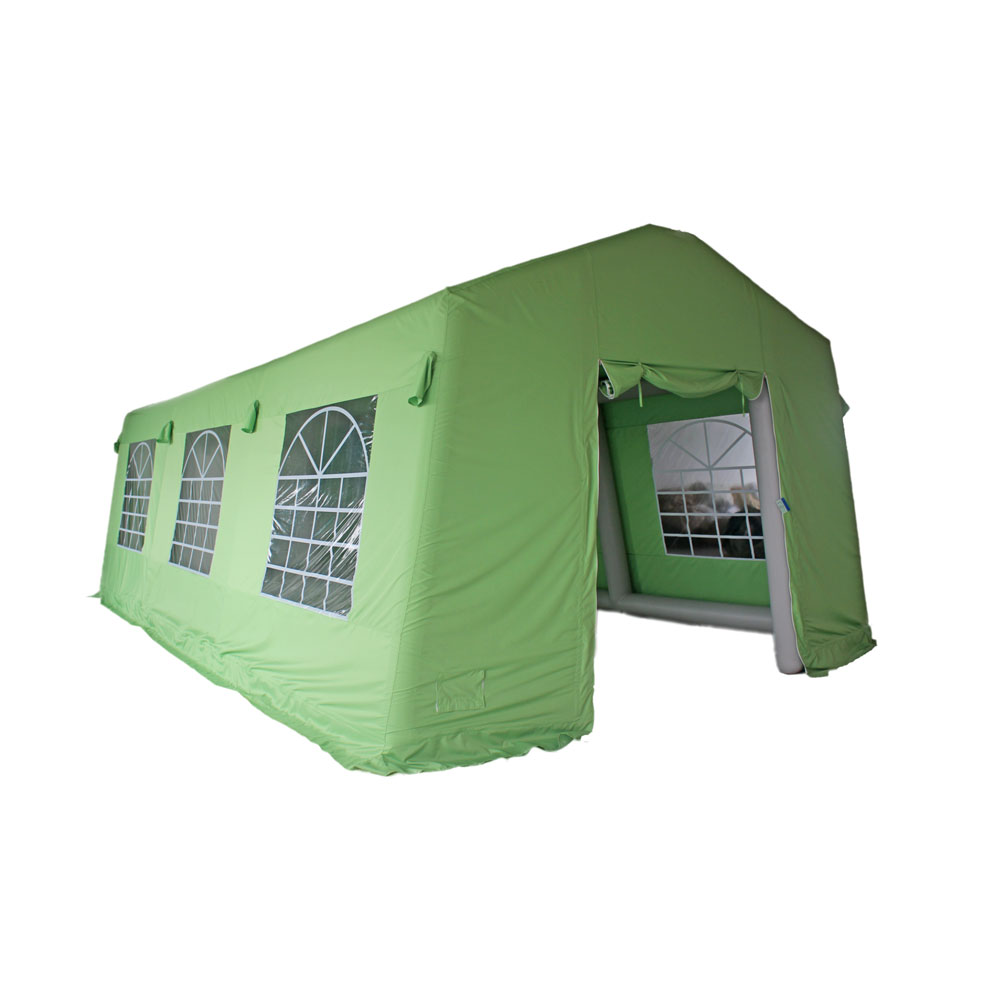
This guide is written for humanitarian procurement officers, logistics coordinators, and OEM / ODM tent manufacturers who are structuring a relief-tent procurement against a UN or NGO specification. The framework is the public IFRC / UNHCR / IASC documentation; the worked example is the Qiahe emergency inflatable tent for disaster relief, which is a PU-coated Oxford Inflatable Tent with CPAI-84 Level 5 flame retardancy and -30 °C cold-rated service. Therescue-inflatable-shelter product line is the broader SKU family, and the Qiahe contact page is the entry point for a project-specific quotation and sample request. A procurement officer who walks through the six-step framework below before contacting a factory is the procurement officer who receives a manufacturable quotation; a procurement officer who contacts a factory with a generic "we need tents" brief receives a generic marketing sheet.
TL;DR
- The global humanitarian shelter procurement framework is built on three pillars: the IFRC Sphere standards (technical quality, accountability), the UNHCR specifications (refugee-specific), and the IASC cluster coordination (which agency procures what).
- The five technical specifications a UN / NGO relief tent must meet are CPAI-84 or NFPA-701 flame retardancy, wind-load resistance to the IFRC's working minimum, water resistance to the IFRC's working minimum, a service-temperature range that covers the deployment climate, and a folded-pack volume that fits the logistics envelope.
- The four procurement models are direct UN agency procurement, IFRC international appeal procurement, ICRC bilateral procurement, and NGO direct procurement — each with a different bidding process, a different payment structure, and a different lead-time envelope.
- The five common failure modes in a relief-tent procurement are spec misalignment (factory tent does not meet the IFRC fire / wind / water spec), packaging mismatch (folded pack volume exceeds the container envelope), colour misalignment (the colour is not the IFRC / UNHCR recognised shelter colour), logistics coordination (the tent arrives without the pump / stakes / repair kit), and certification documentation (the test reports do not match the destination agency's dossier requirement).
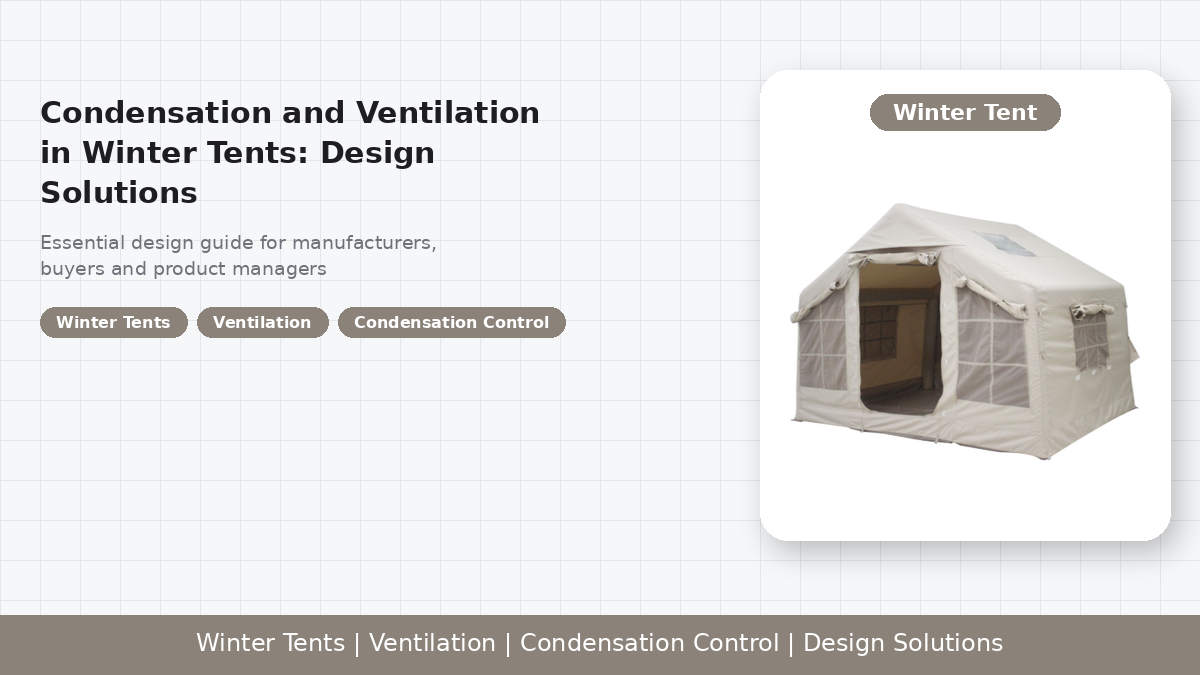
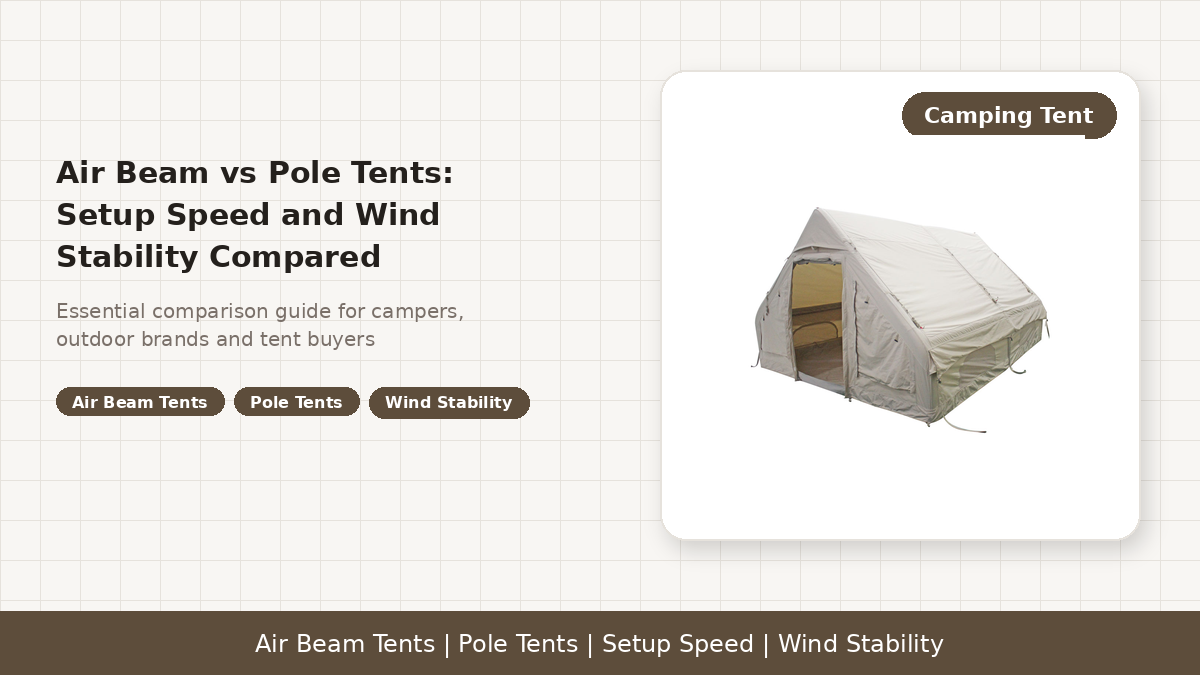
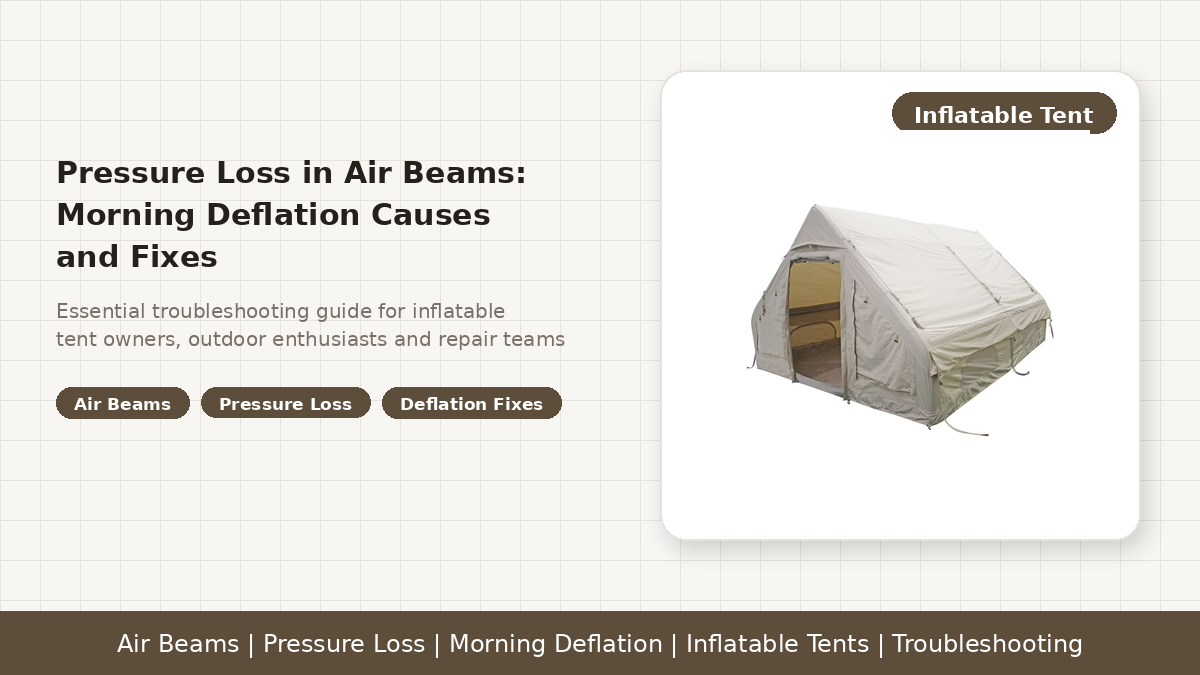
- The Qiahe emergency Inflatable Tent for disaster relief is a worked example: PU-coated Oxford fabric, CPAI-84 Level 5 flame retardant, -30 °C service, integrated PVC air frame, manual pump included, "set up in just a few minutes" per the product page.
- A Chinese OEM Inflatable Tent factory with 20+ years of OEM / ODM outdoor-products experience, integrated production from raw material to finished product, and a 40' HQ container logistics framework is the typical factory profile for a UN / NGO relief-tent procurement.
The Humanitarian Shelter Framework: IFRC, UNHCR, IASC
The humanitarian shelter sector is not a single market. It is a coordinated multi-agency procurement environment governed by three overlapping frameworks, and a procurement officer who is not fluent in all three will hit a wall at the bid-tender stage.
The IFRC Sphere standards are the technical-quality and accountability baseline for humanitarian response, including shelter. The Sphere Handbook covers the minimum technical standards for shelter and settlement, the indicators that measure compliance, and the accountability framework that holds responders to those standards. The Sphere shelter chapter is the most-cited reference in a relief-tent procurement because it sets the working minimum for fire retardancy, wind load, water resistance, durability, and cultural appropriateness.
The UNHCR emergency shelter specifications are the refugee-specific technical standards. UNHCR procures family tents, communal tents, and emergency shelter kits for refugee operations, and the UNHCR specifications are the most-cited reference for refugee-camp shelter procurement. The UNHCR specifications are stricter than the IFRC Sphere minimums in some areas (notably wind load and service life) because the refugee-camp deployment is long-term rather than emergency.
The IASC cluster coordination framework allocates the procurement responsibility across UN agencies, the Red Cross / Red Crescent movement, and the major humanitarian NGOs. The camp coordination / camp management (CCCM) cluster and the emergency shelter cluster are the two relevant clusters, and they coordinate the procurement to avoid duplication. A procurement officer who is bidding for a specific deployment has to register with the relevant cluster and follow the cluster's bidding process.
The cross-references for the framework are the UN Office for the Coordination of Humanitarian Affairs (OCHA) for the operational coordination, the International Organization for Migration (IOM) for the displacement-tracking and shelter-cluster co-lead, the World Health Organization (WHO) for the health and hygiene aspects of shelter design, and the UN Global Marketplace (UNGM) for the supplier registration and tender response system used by UN agency procurement offices.
A factory that is responding to a UN or NGO bid has to understand the difference between these three frameworks. A tender from UNHCR has a different spec sheet, a different bidding process, and a different payment structure from a tender from the IFRC or from a national Red Cross society. The factory's bidding team has to be able to match the bid to the framework.
The 5 Technical Specifications a Relief Tent Must Meet
The IFRC Sphere standards and the UNHCR specifications set the working minimum for five technical specifications. A factory tent that does not meet all five cannot be accepted into a UN / NGO relief-tent procurement.
1. Flame retardancy.The IFRC Sphere standard references CPAI-84 (the canvas products association international fire-retardant standard, originally developed for camping tent canvas) and NFPA-701 (the National Fire Protection Association standard for flame propagation of textiles). The CPAI-84 Level 5 classification is the highest commercial classification under the standard, and the UNHCR specification typically requires CPAI-84 Level 4 or higher. A factory that does not hold a current CPAI-84 or NFPA-701 test report cannot ship into a UN / NGO procurement. The Qiahe emergency Inflatable Tent is published as CPAI-84 Level 5 flame retardant, which is the working maximum for the standard.
2. Wind load. The IFRC Sphere working minimum for wind load is a reference wind speed that the tent has to withstand without structural failure, and the UNHCR specification is typically 20–30% higher than the IFRC minimum for refugee-camp deployment. A factory tent that is rated for "light to moderate wind" is not a relief tent; the wind-load rating has to be specific, tested, and documented.
3. Water resistance. The IFRC Sphere working minimum for water resistance is a hydrostatic-head rating (in millimetres of water column) that the tent fabric has to withstand, and the UNHCR specification sets a higher hydrostatic-head minimum for refugee-camp deployment. A tent fabric that is "water-resistant" is not a relief tent; the hydrostatic-head rating has to be specific, tested, and documented.
4. Service temperature range.A relief tent has to deploy in climates that range from tropical (40 °C + high humidity) to cold-climate (-20 °C to -40 °C). The factory's published service-temperature range has to cover the deployment climate, and the cold-rated fabric has to be tested at the deployment temperature, not at room temperature. The Qiahe emergency Inflatable Tent is published as resistant to temperatures as low as -30 °C, which covers the cold-climate refugee-camp and disaster-response envelope.
5. Folded-pack volume. A relief tent has to fold into a logistics envelope that fits a 40' HQ container, a 20' container, or a helicopter sling load. The IFRC Sphere standard references a per-person litre volume for the folded tent, and the UNHCR specification sets a working maximum for the total kit volume (tent + frame + accessories). A tent that is "easy to carry" is not a relief tent; the folded-pack volume has to be specific, measured, and documented.
A factory that meets all five specifications is a candidate for a UN / NGO procurement. A factory that meets four of the five is a candidate for a national Red Cross society procurement, where the standards are typically the IFRC minimums without the UNHCR uplift. A factory that meets three or fewer is a candidate for a commercial outdoor-procurement programme, not a humanitarian procurement.
The 4 Procurement Models: UN, IFRC, ICRC, NGO
The four procurement models a Chinese OEM Inflatable Tent factory has to be able to respond to are UN agency direct procurement, IFRC international appeal procurement, ICRC bilateral procurement, and NGO direct procurement. Each model has a different bidding process, a different payment structure, and a different lead-time envelope.
UN agency direct procurement. The largest UN procurement agencies for shelter are UNHCR (refugee operations), UNICEF (children-and-family shelter), and WFP (logistics). The bidding process is the UN Global Marketplace (UNGM) registration, the tender response through the UN system, and the contract award through the UN procurement office. Payment is typically 30–60 days after delivery, in USD or EUR, with a bank guarantee or a standby letter of credit. The lead-time envelope is typically 60–90 days from contract award to first delivery.
IFRC international appeal procurement. The IFRC and the national Red Cross / Red Crescent societies coordinate emergency appeal procurement through the IFRC procurement office in Geneva or through the regional IFRC logistics hub. The bidding process is the IFRC supplier registration, the framework agreement (FWA) with the IFRC procurement office, and the call-off order against the FWA. Payment is typically 30 days after delivery, in CHF or USD, with a shorter payment cycle than the UN agencies. The lead-time envelope is typically 30–60 days from call-off to first delivery.
ICRC bilateral procurement. The International Committee of the Red Cross procures bilaterally with selected factories that have been pre-qualified through the ICRC supplier qualification process. The bidding process is the ICRC supplier qualification audit, the bilateral framework agreement, and the direct call-off order. Payment is typically 30 days after delivery, in CHF, with a higher payment reliability rating than the UN agencies. The lead-time envelope is typically 30–60 days from call-off to first delivery.
NGO direct procurement. Major humanitarian NGOs — MSF, Oxfam, CARE, IRC, Save the Children, Mercy Corps, and others — procure directly from OEM factories through their own logistics and procurement offices. The bidding process is the NGO supplier registration, the project-specific RFQ, and the direct purchase order. Payment terms are the most variable of the four models; some NGOs pay 30 days, some 60 days, and some require a longer payment cycle. The lead-time envelope is the most flexible, and the order quantity is the most variable.
A factory that is structured to respond to all four procurement models has the broadest addressable market. A factory that is structured to respond to only one model (typically the NGO model, which is the easiest entry point) has a narrower addressable market but a faster qualification cycle. The Qiahe factory profile — 20+ years of OEM / ODM outdoor-products experience, integrated production, USD 85 million annual output value, 2,000 employees, 100,000 m³ factory volume — is the typical profile for a factory that can respond to all four models. The IOM's procurement portal and the UNICEF supply division's procurement portal are the working references for the international procurement side, and the ICRC's procurement page is the working reference for the ICRC bilateral model.
The 5 Common Failure Modes in a Relief-Tent Procurement
The five common failure modes in a relief-tent procurement are the five ways a procurement officer can lose a deployment to a specification gap. The five modes are:
1. Spec misalignment. The factory tent does not meet the IFRC fire / wind / water specification. This is the most common failure mode and is typically the result of the factory quoting against a generic "emergency tent" brief rather than the IFRC Sphere chapter or the UNHCR specification. The fix is a project-specific spec sheet that includes the IFRC / UNHCR minimums, with the test reports and the certification dossier referenced by document number.
2. Packaging mismatch. The folded tent pack volume exceeds the container envelope. This is the second most common failure mode and is typically the result of the factory designing the folded pack for retail shipping rather than for humanitarian container shipping. The fix is a logistics specification that references the 40' HQ container envelope (or the helicopter sling envelope) and the per-tent folded volume target.
3. Colour misalignment. The tent is not the IFRC / UNHCR recognised shelter colour. The IFRC and UNHCR have published colour guidance for shelter and non-food items (NFIs), and a tent that is in a non-standard colour may be rejected at the field-receipt inspection. The fix is to specify the colour per the IFRC / UNHCR colour guidance in the RFQ and to require a colour sample with the bid.
4. Logistics coordination gap. The tent arrives without the pump, the stakes, the guy ropes, or the repair kit. This is the fourth most common failure mode and is typically the result of the factory quoting the tent only and not the accessory kit. The fix is to specify the accessory kit as a separate line item in the RFQ, with the kit weight and the kit volume documented.
5. Certification documentation gap. The test reports do not match the destination agency's dossier requirement. This is the fifth most common failure mode and is typically the result of the factory quoting against a generic CPAI-84 or NFPA-701 test report rather than the agency's specific dossier format. The fix is to request the agency's dossier format from the procurement officer and to match the factory's test reports to the dossier format before the bid is submitted.
A procurement officer who pre-empts the five failure modes in the RFQ is the procurement officer who receives a clean bid. A procurement officer who submits a generic RFQ is the procurement officer who has to re-tender at the deployment cost of a delayed shelter delivery.
The Qiahe Worked Example
The Qiahe worked example product, the emergency inflatable tent for disaster relief, is the entry SKU for a single-product RFQ. The 救援充气帐篷系列 covers the medical, command, triage, and decontamination variants that a UN or NGO deployment typically requires in addition to the standard emergency tent. For a project-specific quotation, a sample request, and a factory audit visit, the 获取报价与打样 page is the entry point. The Ningbo Qiahe factory is located in Yuyao City, Zhejiang Province, China, with phone +86 13567931228, email qh@nbqiahe.com, and WhatsApp +86 18892661949. The Ningbo Qiahe Products Co., Ltd. was founded in 2002, with USD 85 million annual output value, 2,000 employees, and 100,000 m³ factory volume per the company about page.
The Logistics Envelope: Container, Helicopter, and Truck
The logistics envelope for a relief-tent procurement is the second most important specification after the technical specification, and a factory that cannot document the folded-pack volume and the per-container quantity is not a viable bidder.
The 40' HQ container is the most common logistics envelope for a UN / NGO procurement. The internal volume is approximately 76 m³, and the typical tent density is 8–12 tents per cubic metre of folded-pack volume (depending on the tent size and the accessory kit). A 40' HQ container can therefore hold several hundred small tents or several dozen large tents, depending on the SKU. The factory's bid has to include the per-tent folded volume and the per-container quantity for the buyer's logistics team to plan the sea-freight envelope.
The 20' container is the working envelope for a smaller deployment or a transhipment to a land-locked destination. The internal volume is approximately 33 m³, and the per-container quantity is roughly 40–45% of the 40' HQ quantity. The factory's bid has to include the 20' container packing plan for a deployment that has a smaller initial quantity.
The helicopter sling load is the working envelope for a remote-access deployment where the tent has to be sling-loaded from a helicopter to a disaster site that has no road access. The sling-load envelope is typically 800–1,500 kg per load, depending on the helicopter type, and the per-load tent quantity is typically 4–10 tents. The factory's bid has to include the sling-load packaging option (a reinforced bag with reinforced lifting points) for a remote-access deployment.
The factory's logistics team has to be able to document all three envelopes for the buyer's logistics team to plan the deployment. A factory that quotes only the 40' HQ container quantity is a factory that is not structuring the bid for a multi-modal humanitarian deployment.
The Quality Assurance and Pre-Shipment Inspection
The quality assurance (QA) framework for a UN / NGO relief-tent procurement is the third specification, after the technical specification and the logistics envelope. The framework typically includes pre-production sample approval, in-line production inspection, pre-shipment inspection, and container-loading supervision.
Pre-production sample approval is the buyer's first gate. The factory produces 2–5 pre-production samples that match the buyer's spec sheet, and the buyer inspects the samples against the spec. The CPAI-84 / NFPA-701 test report, the hydrostatic-head test report, and the wind-load test report have to be included in the pre-production sample dossier. A pre-production sample that does not include the test reports is a sample that the buyer cannot approve.
In-line production inspection is the buyer's second gate. The factory produces 10–30% of the order quantity, and the buyer's QA team inspects the production run at the factory. The in-line inspection covers the fabric quality, the seam quality, the flame-retardant treatment, the dimensions, the colour, and the accessories. An in-line inspection that finds a quality issue triggers a corrective-action cycle before the production run continues.
Pre-shipment inspection is the buyer's third gate. The factory produces 100% of the order quantity, packs the order into the container, and the buyer's QA team inspects a random sample of the packed cartons against the spec. The pre-shipment inspection includes the final QA test on a randomly selected tent, the packaging inspection, the label inspection, and the container-loading inspection.
Container-loading supervision is the buyer's fourth gate. The factory loads the container, and the buyer's logistics team supervises the loading to confirm that the container is loaded per the buyer's logistics plan. A container-loading supervision that finds a loading issue triggers a re-load before the container is sealed.
A factory that does not support the four-gate QA framework is a factory that is not structured for a UN / NGO procurement. A factory that supports the four-gate QA framework is a factory that has structured the production line and the QA team for the humanitarian sector.
What a Procurement Officer Should Ask the Factory
A pre-qualification conversation with a Chinese OEM Inflatable Tent factory should include the following questions, with the factory's answer documented in the supplier qualification dossier:
- What is the flame-retardant standard and the test report number for the relief tent SKU? CPAI-84 Level 5 is the working maximum; CPAI-84 Level 4 is the UNHCR working minimum. The test report has to be from an accredited lab, with the report dated within the last 12 months.
- What is the wind-load rating and the test report number? The wind-load rating has to be specific (in km/h or m/s) and tested per the IFRC / UNHCR test protocol. The test report has to be from an accredited lab.
- What is the hydrostatic-head rating and the test report number? The hydrostatic-head rating has to be specific (in mm of water column) and tested per the IFRC / UNHCR test protocol. The test report has to be from an accredited lab.
- What is the service-temperature range? The service-temperature range has to cover the deployment climate, with cold-rated fabric tested at the deployment temperature, not at room temperature.
- What is the folded-pack volume per tent, and the per-container quantity? The folded-pack volume has to be specific (in litres per tent) and measured per the IFRC / UNHCR logistics specification. The per-container quantity has to be calculated for 40' HQ, 20', and helicopter sling-load envelopes.
- What is the accessory kit per tent? The accessory kit has to include the pump, the stakes, the guy ropes, and the repair kit, with the kit weight and the kit volume documented.
- What is the colour per the IFRC / UNHCR colour guidance? The colour has to be specified per the IFRC / UNHCR colour guidance, with a colour sample included in the bid.
- What is the QA framework? The QA framework has to include the four gates (pre-production, in-line, pre-shipment, container-loading), with the buyer's QA team invited to each gate.
- What is the lead-time envelope from PO to first delivery? The lead-time envelope has to be specific (in working days or weeks) and documented per the procurement model's working envelope (UN, IFRC, ICRC, NGO).
- What is the payment structure? The payment structure has to be documented per the procurement model's working envelope (UN: 30–60 days, IFRC: 30 days, ICRC: 30 days, NGO: 30–60 days).
A factory that answers all 10 questions with project-specific detail is a factory that is structured for a UN / NGO procurement. A factory that answers only the price and the lead time is a factory that is quoting a commercial outdoor programme, not a humanitarian programme.
Closing Notes for a UN / NGO Relief-Tent Procurement
A UN / NGO relief-tent procurement is structured around the IFRC Sphere standards, the UNHCR specifications, and the IASC cluster coordination framework. A factory tent that meets the five technical specifications (flame retardancy, wind load, water resistance, service temperature, folded-pack volume) is a candidate for a humanitarian procurement. A factory that supports the four procurement models (UN, IFRC, ICRC, NGO), the four-gate QA framework, and the three logistics envelopes (40' HQ, 20', helicopter sling load) is structured for the full humanitarian sector.
For a procurement officer evaluating the Qiahe factory, the emergency inflatable tent for disaster relief is the worked example SKU with CPAI-84 Level 5 flame retardancy, -30 °C service, integrated PVC air frame, and integrated manual pump. The rescue-inflatable-shelter product line is the broader SKU family. The Qiahe contact page is the entry point for a project-specific quotation, a sample request, and a factory audit visit. To 获取报价与打样, a procurement officer submits the project-specific spec sheet and the IFRC / UNHCR reference framework through the contact form, and the engineering team returns a project-specific quotation within 5 working days. The Ningbo Qiahe factory was founded in 2002, with USD 85 million annual output value, 2,000 employees, and 100,000 m³ factory volume per the about page.
A procurement officer who walks through the 10-question pre-qualification list before placing the first PO is buying a structured humanitarian programme. A procurement officer who places the first PO on the FOB price alone is buying a commercial outdoor product, not a humanitarian relief tent.