




TL;DR
- For outdoor gear in 2026, the factory-direct vs trading company question is no longer a price-only call; it is a total-cost call that includes freight, QC, warranty, and after-sales, and the right answer depends on the order size, the customization depth, and the buyer's procurement infrastructure.
- A trading company adds a layer of margin on top of the factory invoice, but the trading company also absorbs freight coordination, QC, and after-sales; the right comparison is unit cost plus ownership cost, not invoice price.
- Factory-direct wins on cost when the buyer has the procurement infrastructure to handle QC, freight, and after-sales; a trading company wins on cost when the buyer does not, because the trading company is buying that infrastructure for them.
- Factory-direct risks cluster around QC variability, freight coordination, and warranty handling; trading-company risks cluster around price opacity, slower engineering feedback, and a thinner customization ceiling.
- If you are sourcing outdoor gear at meaningful volume, the right move is to talk to both a verified factory like QIAHE and a credible trading company on the same RFQ, and let the comparison come from a side-by-side quote, not from a sales pitch.
For outdoor gear in 2026, the factory-direct vs trading company question is no longer a price-only call; it is a total-cost call that includes freight, QC, warranty, and after-sales, and the right answer depends on the order size, the customization depth, and the buyer's procurement infrastructure. I have been on the outdoor gear side of this comparison for 20+ years at QIAHE, and the pattern is now obvious to me: the buyers who treat the choice as invoice price alone usually pay for it on the freight, QC, or warranty line, and the buyers who treat the choice as a total-cost comparison usually end up with a lower landed cost. I have watched this play out across thousands of outdoor gear orders on my factory floor. In this piece I walk outdoor gear buyers and procurement teams through every layer of that decision: why the comparison is no longer a price-only call, where the margin stack actually lives on each channel, what the risk picture looks like on each side, who owns QC and warranty on each channel, how communication and lead time diverge between the two, and how to choose between them in 2026. My goal is not to push you toward one channel; it is to leave you with the same total-cost framework I use with my own OEM/ODM clients at QIAHE, so that you can read a factory quote and a trading-company quote on the same page and pick the right channel for the project in front of you.
Why the Factory-Direct vs Trading Company Question Matters More in 2026
From the factory floor: I want to put my name on this opening because I have watched this question get asked on every outdoor gear RFQ I have seen in the last five years, and the buyers who do well on it are the buyers who do the math, not the buyers who pick a channel from a sales pitch. I am honest with my clients when the trading-company channel is the right answer for their order profile.
The factory-direct vs trading company question matters more in 2026 than it did three years ago in my view, because the outdoor gear market has split into two segments: the high-volume, commodity-spec segment where the trading-company channel still wins on simplicity, and the high-customization, mid-volume segment where the factory-direct channel has quietly taken most of the margin stack. The buyers who do well in both segments are the buyers who treat the channel as a total-cost decision rather than a price-only decision.
Why this comparison is no longer a price-only question
I see three forces pushing the comparison away from a price-only call this year. First, freight has moved enough in 2026 that the line item has to be modeled, not estimated, and a buyer who skips the freight line ends up surprised at the destination port. Second, destination-market compliance has tightened across the EU, the GCC, and Australia, and a buyer who skips the compliance plan ends up surprised at customs. Third, after-sales and warranty have become a real line item on outdoor gear in my factory experience, because carports, awnings, and gazebos sit outside in the weather, and the warranty conversation starts the day the container lands.
What changed in 2026
What changed in 2026 specifically, in my view, is that the trading-company channel has gotten more transparent, and the factory-direct channel has gotten more accessible. Verified factories like QIAHE that used to require a phone call and a wire transfer to reach are now reachable through a contact form, a YouTube factory tour, and a published RFQ process. The buyer in 2026 has more information on both channels, which means the comparison can be made on real data, not on who picked up the phone first.
The Cost Picture: Where the Margin Stack Actually Lives
From the factory floor: I want to lay out the cost picture honestly because it is the picture most buyers read first and read least accurately. The factory-direct invoice is the factory's own price, the trading-company invoice is the factory's price plus a margin, and the landed cost on the buyer's dock is the only cost that actually matters. I have walked enough outdoor gear orders through to the destination port to know the gap on the visible cost line and the gap on the landed cost line are not the same gap.
The cost picture is a margin stack, and the stack lives in six layers that both channels have to pay for one way or another in my experience. The factory invoice is the top, the landed cost on the dock is the bottom, and the gap between the two is the layer the channel decision lands on. In my view, the layer that the trading-company channel earns its margin on is the same layer that the factory-direct channel pushes onto the buyer's plate.
The visible cost line
The visible cost line is the factory invoice, and on that line, factory-direct almost always wins in my order book. The factory-direct quote I send to my clients is the factory's own price, and the trading-company quote is the factory's price plus a margin layer. I see this in my own order book: a comparable outdoor gear SKU will typically come in at a lower factory-direct invoice than a trading-company invoice, and the gap on the visible cost line is the simplest signal I read when I look at the two quotes for the first time.
The hidden cost lines
The hidden cost lines are the lines that flip the comparison in my experience, and the buyer who ignores them is the buyer who gets surprised at the dock. On the factory-direct channel, the hidden cost lines I track are the QC trip, freight coordination, customs paperwork, destination-port handling, warranty claim, and after-sales phone. On the trading-company channel, the hidden lines are bundled into the margin layer, and the buyer sees a single line item instead of six. The right comparison in my book is unit cost plus those hidden lines, and that comparison usually ends up either a wash or a small win for factory-direct at meaningful volume.
The Risk Picture: What Each Channel Quietly Carries
From the factory floor: I want to name the risk picture directly because it is the picture that decides the channel decision on a real outdoor gear project, and the risk picture is the one I am most often asked about on a first call. The factory-direct risks and the trading-company risks are different in kind, and the right channel is the one whose risk set the buyer is better equipped to manage. I have seen both picks go wrong when the buyer did not know the risk set up front.
The risk picture is different in kind, not just in degree in my view, and that is the part of the comparison most buyers miss. The factory-direct channel carries the risks that come with ownership in my experience: QC variability, freight coordination, warranty handling, and after-sales. The trading-company channel carries the risks that come with intermediation: price opacity, slower engineering feedback, and a thinner customization ceiling. Both risk sets are real, and the right channel is the one whose risk set the buyer is better equipped to manage.
Factory-direct risks
Factory-direct risks cluster around three lines in my factory experience. The QC line is the biggest in my book, because on a factory-direct order the buyer's QC is the only QC, and a buyer who skips pre-shipment inspection is trusting the factory's QC, which is exactly the variable they were trying to de-risk. The freight line is the second biggest, because the buyer is now the freight coordinator, the customs paperwork owner, and the destination port handler, and any slip shows up on the buyer's P&L. The warranty line is the third biggest, because the factory is the warrantor but the buyer is the customer-facing party on a claim.
Trading-company risks
Trading-company risks cluster around a different three lines in my view. The price opacity line is the biggest, because a trading-company quote bundles the factory margin, the trading-company margin, the freight, and the QC line, and the buyer cannot see the factory line without asking for it. The engineering feedback line is the second biggest in my experience, because the engineering loop runs through the trading company, not the factory, and a customization question that takes 24 hours at the factory can take five business days at the trading company. The customization ceiling line is the third biggest in my view, because a trading company is taking what the factory can make, not what the factory can engineer, and a project that needs a real engineering change usually has to go factory-direct at some point anyway.
The Quality Picture: Who Owns the QC and the Warranty
From the factory floor: I want to be specific about QC and warranty because the conversation is the one I spend the most time on with my OEM/ODM clients. Outdoor gear sits outside in the weather, and a QC miss shows up as a field failure in the first storm, so the QC line and the warranty line are the two lines I always push to the top of the comparison. I would rather lose an order to a buyer who picks a trading-company because they are not staffed for QC than win an order where the buyer skips their own QC on a factory-direct channel.
The quality picture is the picture that decides the channel decision on a real outdoor gear project in my experience, because outdoor gear sits outside in the weather, and a QC miss shows up as a field failure in the first storm. The QC and warranty ownership is different on the two channels in my view, and the difference is the difference the buyer is paying for when the trading-company invoice comes in higher than the factory-direct invoice.
Who runs QC on the floor
On the factory-direct channel I work on, QC on the floor is run by the factory's in-house QC team, and the buyer's QC is whatever the buyer sends in: a pre-shipment inspection trip, a third-party agency, or a video walk-through. The buyer who skips their own QC on a factory-direct order is paying for the factory's QC alone, which is exactly the variable they were trying to de-risk. On the trading-company channel in my experience, the trading company is the buyer's de facto QC.
Who handles warranty
On the factory-direct channel I work on, the factory is the warrantor, and the buyer is the customer-facing party. A warranty claim on a factory-direct order usually flows buyer-to-factory in my book, and the resolution time is the factory's, not under the buyer's control. On the trading-company channel, the trading company is the customer-facing warrantor, and the resolution time is usually faster because the trading company is the layer the customer is interacting with. The trade-off in my experience is that a trading-company warranty is usually a smaller commitment than a factory-direct warranty, because the trading company is reselling the factory's terms rather than extending them.
The Communication and Lead-Time Picture: Where the Two Channels Diverge
From the factory floor: I want to lay out the communication and lead-time picture honestly because it is the one my OEM/ODM clients feel before they can measure it. The factory-direct channel runs at the speed of the factory's engineering calendar, the trading-company channel runs at the speed of the trading company's communication layer on top of the factory's calendar, and the two speeds are different. The right speed is the one the buyer wanted in the first place.
The communication and lead-time picture is where the two channels diverge the most in the day-to-day experience in my view, and the divergence is the part of the comparison most buyers feel before they can measure it. The factory-direct channel runs at the speed of the factory's engineering and production calendar in my experience, and the trading-company channel runs at the speed of the trading company's communication layer on top of the factory's calendar. The two speeds are different in my view, and the difference is the difference between feeling in control of the order and feeling like the order is happening to you.
Engineering feedback loop
The engineering feedback loop is faster on the factory-direct channel in my book, because the loop runs directly between the buyer's engineer and the factory's engineer, with no intermediary. I see this on my own OEM/ODM orders at QIAHE: a customization question that takes 24 hours on a factory-direct line takes three to five business days on a trading-company line, and the delay is not because the trading company is slow, it is because the trading company is one more pair of hands the message has to pass through.
Lead time and shipping
Lead time and shipping is a wash on the two channels for most outdoor gear categories in my view, because the production lead time is set by the factory either way, and the shipping lead time is set by the carrier either way. The trading-company channel sometimes wins on shipping in my experience because the trading company is consolidating orders and can offer a faster container slot, and the factory-direct channel sometimes wins because the factory is loading the container directly. The right comparison in my book is to ask both channels for the production lead time and the shipping lead time in writing.
How to Choose Between Factory-Direct and a Trading Company in 2026
From the factory floor: I want to give the buyer my honest decision framework because it is the one I use on my own OEM/ODM orders at QIAHE, and it is the one I wish every buyer in 2026 used. The framework is not a pitch toward factory-direct; it is a total-cost framework that picks the right channel for the order profile, and the right channel can be a trading company on low-volume, commodity-spec, infrastructure-light orders. I would rather the buyer use this framework and pick a trading company than pick factory-direct without the QC infrastructure to back it up.
Choosing between factory-direct and a trading company in 2026 is a total-cost decision, not a price decision in my view, and the right move is to put both channels on the same RFQ and let the comparison come from the line items, not from a sales pitch. The framework I walk my own clients through is six steps: build the same RFQ for both channels, read the unit cost line first, read the ownership cost line second, layer the risk lines on top, test the engineering feedback loop, and pick on total landed cost.
- Build the same RFQ for both channels. Same SKU, same spec, same quantity, same destination port, same Incoterm, same compliance scope, same payment terms. If the RFQs are not the same, the comparison is not the same.
- Read the unit cost line first. The trading-company quote will usually come in higher. The gap on the unit cost line is the simplest signal to read.
- Read the ownership cost line second. QC, freight, warranty, after-sales. On the factory-direct channel, this is the buyer's plate. On the trading-company channel, this is the trading company's plate.
- Layer the risk lines on top. QC pass rate, lead-time slippage, warranty denial, destination-market compliance failure. Ask both channels in writing how they would handle each scenario.
- Test the engineering feedback loop. Send a non-trivial customization question to both channels and time the response. The response time is the line that separates a real channel from a slow one.
- Pick on total landed cost. Unit cost plus ownership cost plus risk-adjusted cost. Put the decision in writing so the next order can be benchmarked against this one.
For an outdoor gear project at meaningful volume with real customization, the right answer on this framework in my view is usually factory-direct, with a verified manufacturer like QIAHE as the channel partner. For an outdoor gear project at low volume, with commodity spec, and without dedicated procurement infrastructure, the right answer in my experience is usually a trading company. The framework is the same in both cases in my view; what changes is the order profile.
Get a quote and a sample →Frequently Asked Questions from Outdoor Gear Buyers
- Is factory-direct always cheaper than a trading company for outdoor gear?
- On unit cost, usually yes. On total landed cost, not always, because the trading company is buying the buyer a layer of procurement infrastructure (QC, freight, warranty, after-sales) the buyer would otherwise have to staff for themselves. The right comparison is unit cost plus ownership cost, not unit cost alone.
- What are the biggest risks on a factory-direct outdoor gear order?
- QC variability (the buyer's QC is the only QC), freight coordination (the buyer owns the freight, customs paperwork, and destination port), and warranty handling (the factory is the warrantor, but the buyer is the customer-facing party on a claim). The risk is the ownership cost, not the unit cost.
- What are the biggest risks on a trading-company outdoor gear order?
- Price opacity (the trading company quote bundles factory margin, trading-company margin, freight, and QC into one line the buyer cannot see through), slower engineering feedback (the loop runs through the trading company, not the factory), and a thinner customization ceiling (the trading company is reselling what the factory can make, not what the factory can engineer).
- When is a trading company the right answer for outdoor gear sourcing?
- When the buyer does not have the procurement infrastructure to staff QC, freight, customs, and after-sales; when the order is too small to justify a QC trip; when the destination market is new to the buyer; or when the product is commodity-spec.
- When is factory-direct the right answer for outdoor gear sourcing?
- When the order is at meaningful volume, the customization depth is real (custom molds, custom fabric, custom frame geometry), the buyer has the procurement infrastructure to handle QC, freight, and warranty, and the buyer wants a direct engineering feedback loop with the people building the product.
- Does QIAHE offer factory-direct OEM/ODM manufacturing for outdoor gear?
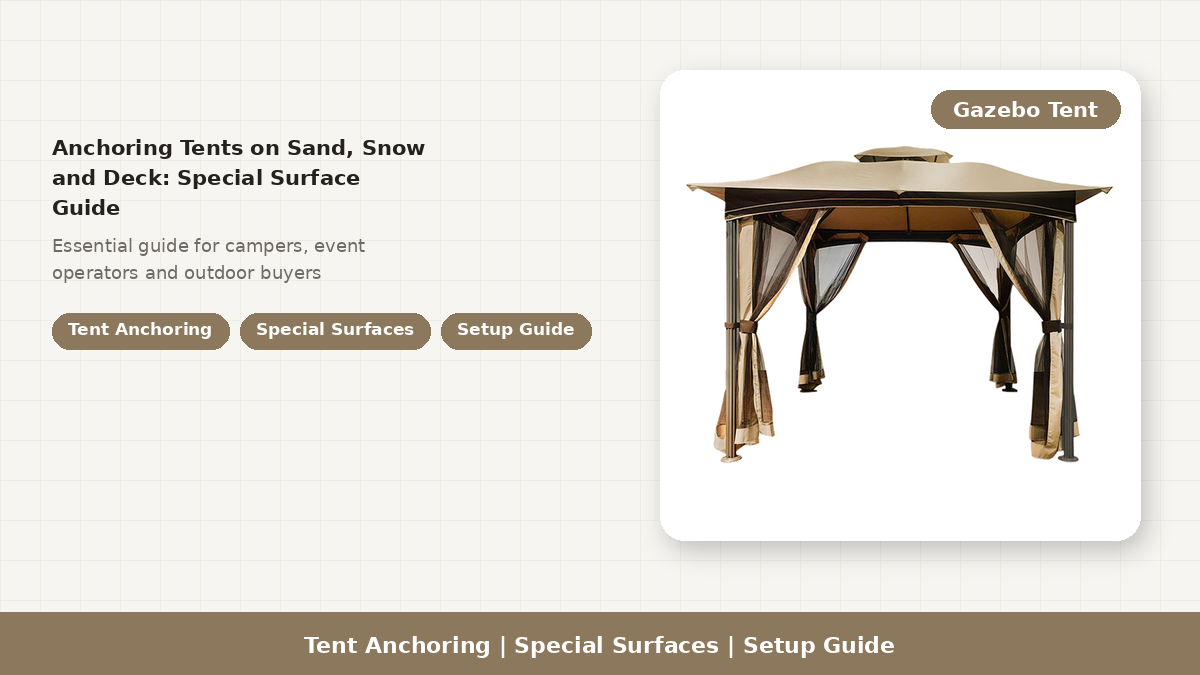
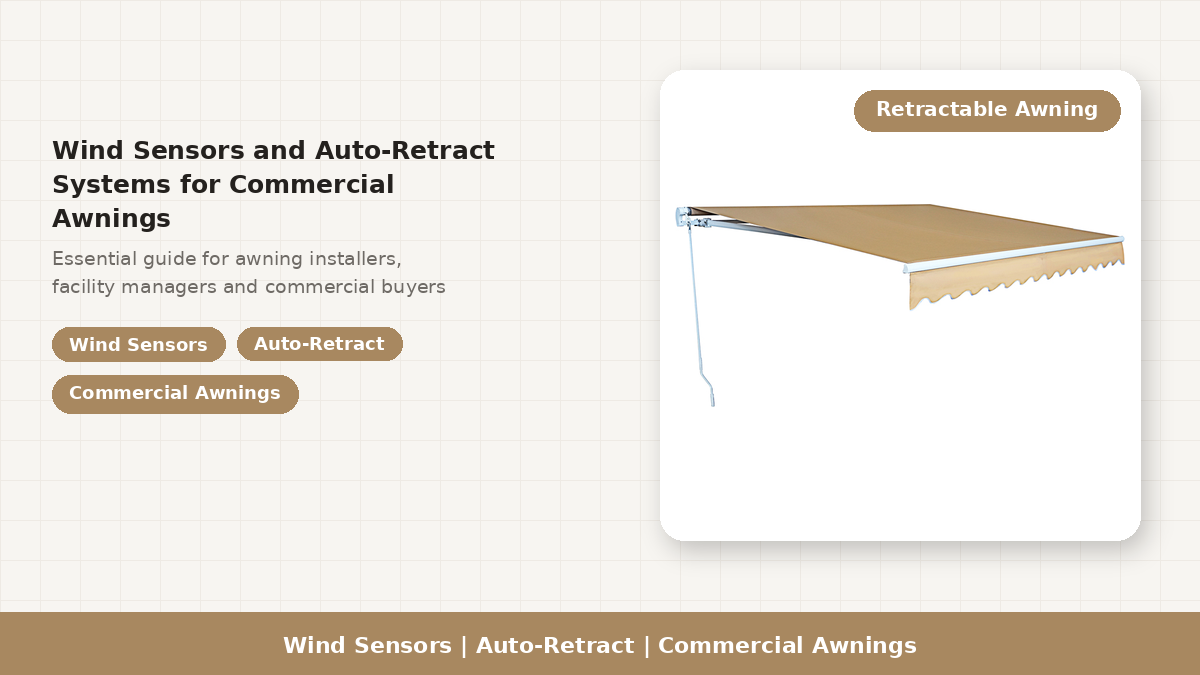
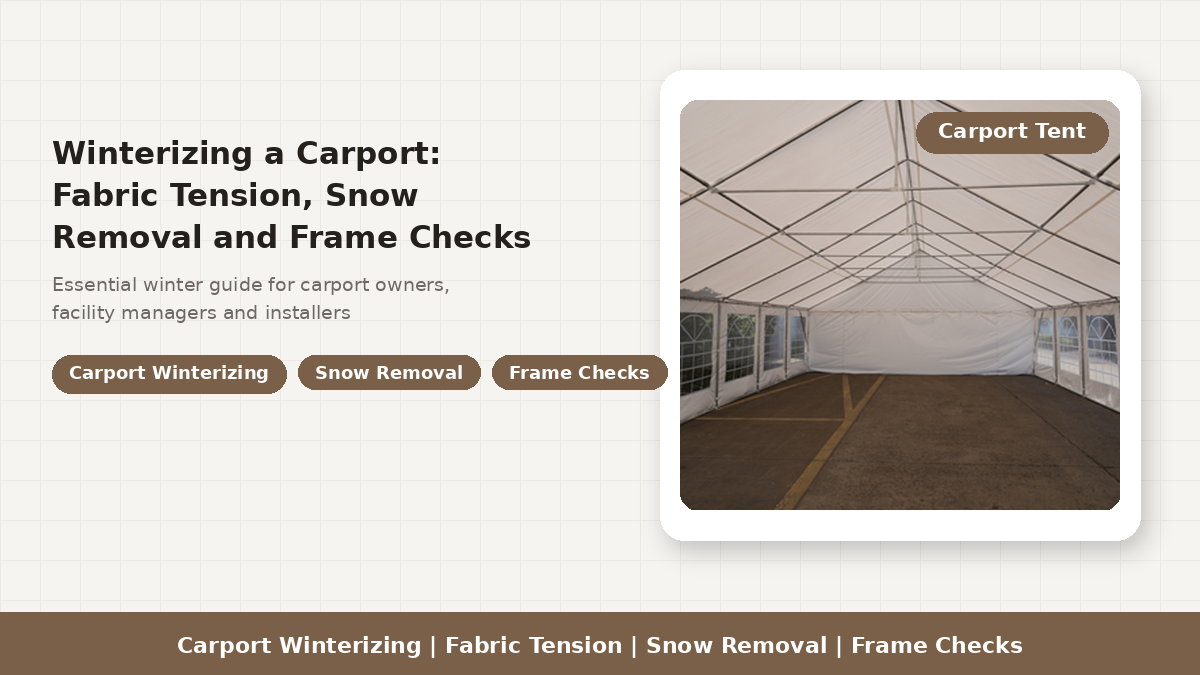
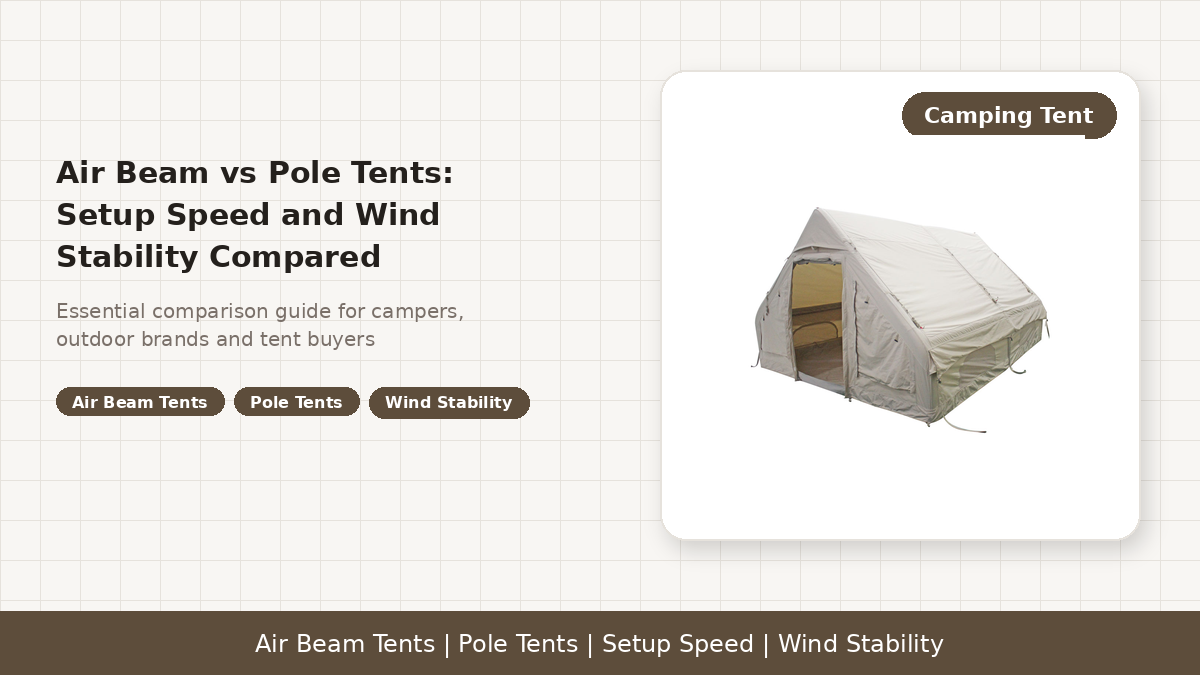
- Yes. QIAHE is a professional manufacturer and exporter with 20+ years of experience in carports, awnings, gazebos, Inflatable Tents, and greenhouse solutions, and supports OEM/ODM custom manufacturing.
- How do I compare a factory quote and a trading-company quote on the same page?
- Build the same RFQ for both channels (same SKU, spec, quantity, port, Incoterm, compliance, payment terms), read the unit cost line first, then the ownership cost line (QC, freight, warranty, after-sales), then layer the risk lines on top, test the engineering feedback loop, and pick on total landed cost.
Last verified: 2026-10-12. Internal references: About QIAHE · Top 10 Trusted Commercial Heavy-Duty Carport Manufacturers in China 2026 · Get a quote and a sample.