




A walk-in greenhouse kit takes up about 1.2 to 1.5 m² of retail floor space in a garden center, and at a typical retail price point that lands between mid-range gardening tools and small outdoor furniture, the margin per square metre is what decides whether the category stays on the floor next season. That is the structural reason private label greenhouse kits have moved up the agenda for garden center buyers, own-brand category managers, and merchandising directors across North America, Europe, and Australia over the last three years. In this article I will share how our packaging and engineering team at QIAHE breaks the greenhouse kit category down into the retail specs that matter, the customization options that make private label work, the box-and-pallet choices that protect margin on the inbound line, and the compliance standards garden centers should ask for before signing the first purchase order.
The short answer: a garden center private label greenhouse kit usually ships in a single-color retail carton with a 4-corner print, a master pack of 1 to 4 inner cartons per outer, and 380 to 720 kits per 40HQ depending on frame size, with a printed color sleeve and an instruction manual that carries the buyer's SKU. The detail behind each of those five numbers is where the program either protects margin or quietly erodes it.
Why Private Label Greenhouse Kits Are a Garden Center Margin Lever
A garden center private label greenhouse kit returns roughly 10 to 15 percentage points more gross margin to the retailer than the equivalent branded kit, because the retail price is set by the garden center rather than the brand owner. The operating reason it works is structural: private label lets the garden center control the SKU matrix, the price point on each kit, and the seasonal merchandising calendar without negotiating with a competing brand.
The trade-off is that the garden center now owns the quality story. Because the retailer's own brand is on the carton, the instruction manual, and the frame header, a quality issue on a private label kit lands directly on the retailer's reputation rather than the upstream brand owner's reputation. We have been in OEM outdoor structures for 20+ years and we see the same pattern repeat: garden centers that succeed with private label greenhouse kits pick a manufacturer with documented test reports, a published capacity, and a packaging team that can lock the retail carton artwork across multiple languages. The Horticultural Trades Association's category data shows garden center retailers across the UK and EU are increasing their own-brand share in the outdoor living category year over year, and the Garden Media Guild has tracked the same shift in editorial coverage.
What Goes Into a Retail-Ready Greenhouse Kit SKU
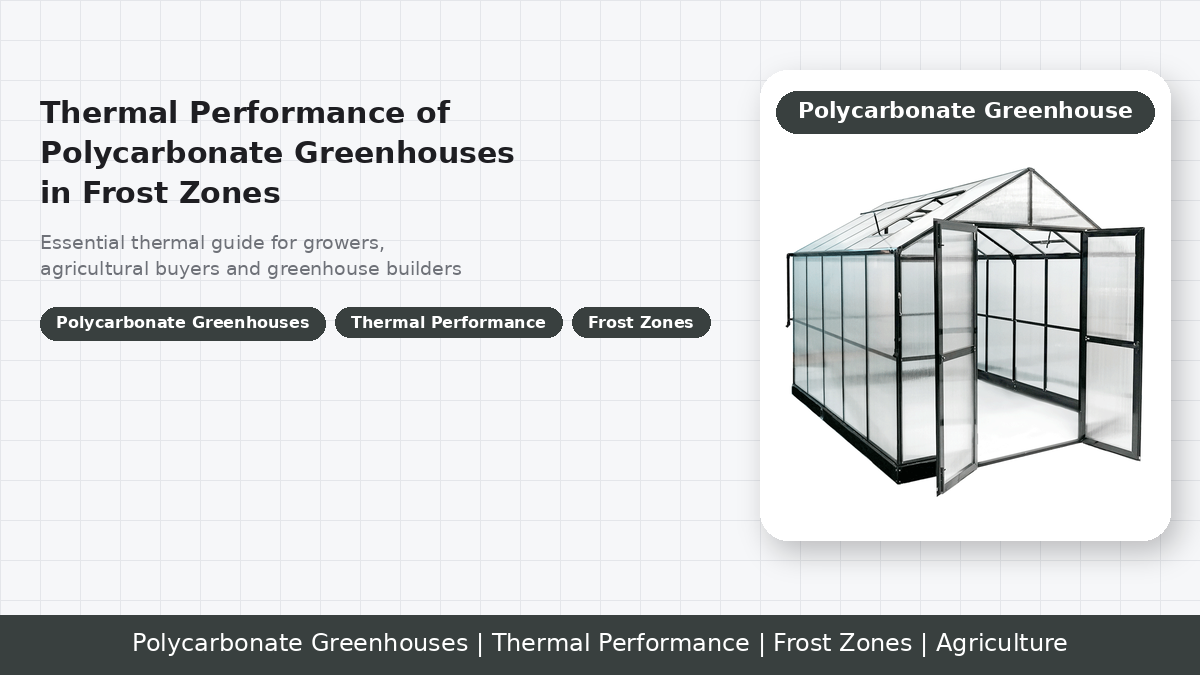
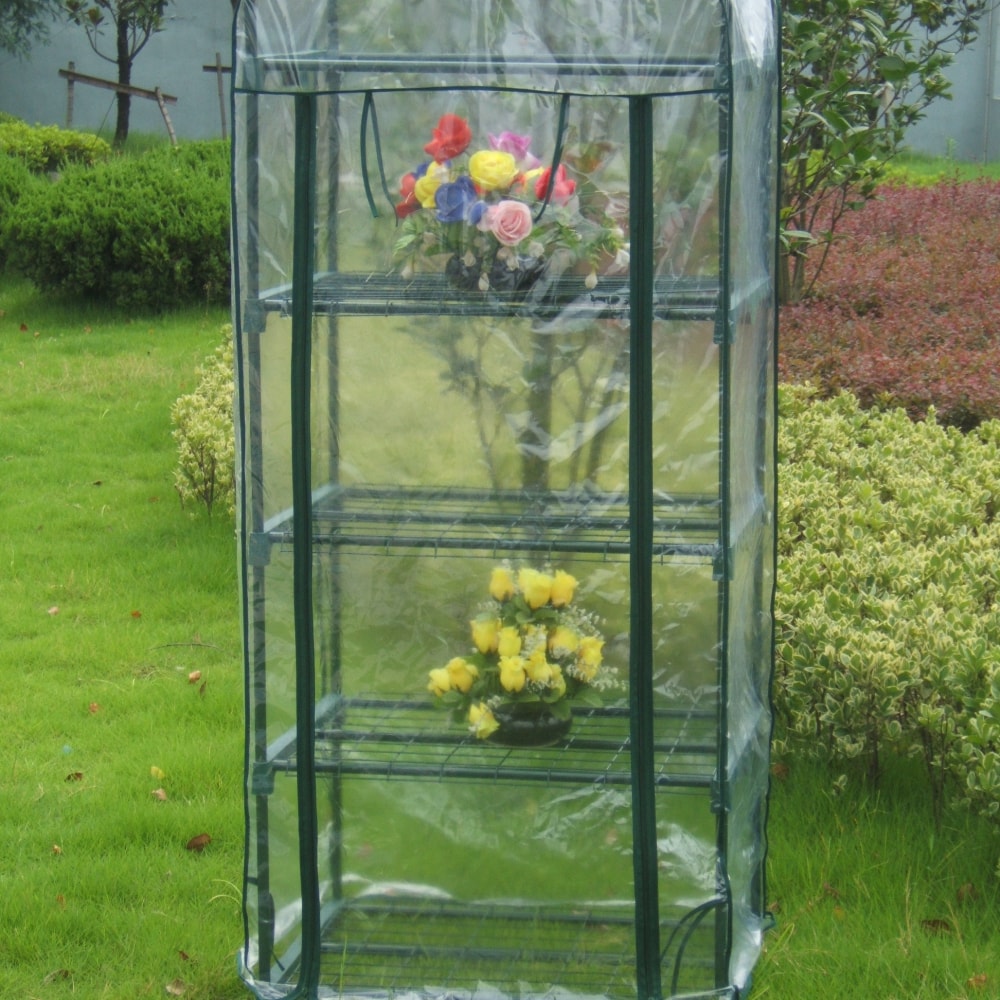
A retail-ready walk-in greenhouse kit is a four-component SKU: the steel tube frame, the cover tier, the hardware kit, and the printed retail carton with instruction manual. Each of the four components has a private label decision attached to it.
Frame width is the first decision. Walk-in greenhouse kits for residential garden center programs typically come in three standard widths: 1.43 m, 2.0 m, and 3.0 m, with a depth matching the width or a 1.43 m by 2.0 m narrow layout. Frame height runs 1.95 m to 2.20 m at the ridge. The four sizes above cover roughly 80% of the programs we have run over the last five years.
Cover tier is the second decision. PVC cover is the entry tier we recommend for spring-to-autumn use. PE mesh cover is what we ship for warm-season growth where ventilation matters more than heat retention. 6 mm twin-wall polycarbonate is the premium tier with a 5 to 8 year UV rating, and we ship it year-round across USDA Hardiness Zones 4 to 9, which is the bulk of the North American residential gardening market. Most garden center private label programs stock PVC as the entry SKU, PE mesh as the summer SKU, and polycarbonate as the upgrade SKU. Frame finish is the third decision, and we have seen it quietly drive returns on coastal-store SKUs: hot-dip galvanized plus powder-coat for within 1 km of ocean, plain painted steel without galvanizing fails salt-spray in 12 to 24 months.
Private Label Branding: Logos, Manuals, and Barcode Layout
A private label greenhouse kit program typically includes the buyer's logo on the retail carton, the instruction manual, the pallet label, and a logo plate on the frame header. The frame logo is the most visible piece because it is what the customer sees at the in-store display and what shows up in any assembled product photo the customer posts on social media.
Artwork setup is where most private label programs stumble on first run. We ask buyers to send logos in vector format (AI, EPS, or PDF) along with Pantone numbers for any frame color match and the instruction manual template in the buyer's preferred language set. The most common language sets we ship are: English plus French for Canadian chains, English plus Spanish for US chains serving Hispanic markets, English plus German plus French plus Dutch for Benelux and DACH chains, and English plus Italian for Italian chains. Barcode layout is the third piece most buyers do not think about until week two: chains typically require EAN-13 for European retail, UPC-A for North American retail, an ITF-14 code on every master pack, and an SSCC code on the pallet label that the warehouse scans at goods-in.
Vector logo file, Pantone numbers for frame color match, retail carton language set, EAN-13 or UPC-A barcode, ITF-14 master pack code, SSCC pallet label, instruction manual with the buyer's SKU, and the buyer's care-line contact for the warranty card.
Packaging Specifications: Carton, Master Pack, Palletization
A retail-ready walk-in greenhouse kit ships in two carton formats: a printed retail carton the customer carries home, and a brown corrugate master pack carton that holds 1 to 4 inner cartons for warehouse storage and store delivery. Both carton formats need to pass transit testing, because the most common return reason we see for garden center greenhouse kits is not the kit itself but the cover arriving torn when the master pack was not specced for the unit's weight.
| Dimension | 1.43 m by 1.43 m kit | 2.0 m by 2.0 m kit | 3.0 m by 3.0 m kit |
|---|---|---|---|
| Retail carton dimensions (L x W x H) | 1,420 x 320 x 200 mm | 1,990 x 360 x 220 mm | 1,560 x 410 x 380 mm (two-piece carton) |
| Retail carton gross weight | 17 to 21 kg | 26 to 32 kg | 48 to 56 kg (two-piece carton) |
| Master pack quantity (inner cartons per outer) | 1 | 1 | 1 (frame) + 1 (cover box) |
| Master pack dimensions (L x W x H) | 1,440 x 340 x 220 mm | 2,010 x 380 x 240 mm | 1,580 x 430 x 400 mm (frame) + 1,580 x 320 x 280 mm (cover) |
| Master pack gross weight | 18 to 22 kg | 27 to 33 kg | 50 to 58 kg (frame) + 12 to 15 kg (cover) |
| Pallet configuration (40HQ) | 24 cartons per pallet layer, 12 layers, 288 per pallet; 2 pallets stacked | 16 per layer, 10 layers, 160 per pallet; 2 pallets stacked | 10 per layer, 6 layers, 60 per pallet; 4 pallets stacked |
| Cover tier weight delta | +1.5 kg for PE mesh, +4 kg for polycarbonate | +2.5 kg for PE mesh, +6 kg for polycarbonate | +4 kg for PE mesh, +10 kg for polycarbonate |
Master pack format matters more than retail carton format for the buyer's inbound logistics cost. Because most greenhouse kit damage in transit happens at the master pack stage, not the retail carton stage, the corrugate grade of the outer carton drives the damage rate more than any other spec on the artwork. We use a minimum double-wall BC-flute corrugate for the master pack on any kit over 25 kg, and we add corner protectors on the polycarbonate upgrade kits because the cover panels are rigid and crack at the corners when the master pack is dropped. Palletization is the third packaging spec buyers should lock early: Euro pallets (800 x 1,200 mm) for European retail, standard 1,100 x 1,100 mm garden center pallets for North American retail, pallet label on the long side at 600 mm to 1,600 mm from the bottom sized to the buyer's warehouse scanner height, stretch-wrap standard, corner-board optional for humid climates.
We have shipped across this spec for five years, and we still send the buyer's warehouse team the master pack dimensions and pallet configuration before we cut the print plate so the warehouse can confirm the kit fits the receiving dock door, the standard pallet rack, and the power walkie that moves pallets from dock to sales floor.
Container Loading and Shipping Formats: FTL, LTL, and Mixed Pallets
A 40HQ container holds 380 to 720 walk-in greenhouse kits depending on frame size, cover tier, and pack format, and the gap between the high and low end of that range is driven by the polycarbonate upgrade kits which pack roughly 40% fewer units per container than the PVC kits. Garden center buyers planning a private label container load should expect the lower end of the range when polycarbonate is in the SKU mix.
| Shipping format | 1.43 m by 1.43 m kit | 2.0 m by 2.0 m kit | 3.0 m by 3.0 m kit |
|---|---|---|---|
| 20FT container (FCL) | 180 to 220 kits | 110 to 140 kits | 180 to 260 kits (frame only) |
| 40FT container (FCL) | 340 to 420 kits | 220 to 280 kits | 340 to 480 kits (frame only) |
| 40HQ container (FCL) | 540 to 720 kits | 380 to 460 kits | 380 to 460 kits (frame only) |
| LCL (less than container load) | Available from 50 kits | Available from 30 kits | Available from 20 kits (frame only) |
| Air freight (urgent restock) | Available, premium routing | Available, premium routing | Not practical due to volumetric weight |
Most garden center private label programs ship FCL 40HQ because the unit economics work out best at that fill rate, and we steer first-time private-label buyers to LCL for the reorder run while they test seasonal sell-through. We handle LCL through our Ningbo consolidator with weekly departures to Long Beach, Rotterdam, and Sydney, and we flag the LCL booking 10 days before vessel cut-off.
For mixed-pallet garden center chains that order across the size matrix, we run a mixed-SKU 40HQ container that combines 1.43 m, 2.0 m, and 3.0 m frames in a single load, and we document every kit's destination on the pallet label so the buyer's warehouse can route correctly. A typical mixed-SKU 40HQ run combining 3 frame widths and 2 cover tiers lands in the 600 to 900 unit range across the SKU mix, depending on the cover tier split. We document the SKU split on the pallet label and on the packing list so the buyer's warehouse can route each pallet to the right store.
Transit testing is the spec that protects the sell-through margin. The International Safe Transit Association's ISTA 3A test sequence covers the full distribution cycle for garden center kits under 70 kg, and we run ISTA 3A on the master pack before we ship the first production run of a new private label SKU. ASTM D4169 is the equivalent US-standard transport package test that North American garden center buyers typically request.
Compliance and Test Reports Garden Centers Should Ask For
The compliance spec that separates a private label greenhouse kit program that protects the buyer's brand from one that quietly exposes it is the structural test report. Garden center buyers should require written test reports for the kit's wind load, snow load, and frame finish before they sign the first purchase order, and they should refresh those test reports on a 24-month cycle because the structural standard changes.
For European retail, the structural design standard we work to is EN 13031 (greenhouses: design and construction), with the snow and wind loads covered by the relevant parts of EN 1991 (Eurocode 1: actions on structures). Buyers in northern Europe typically spec the kit to EN 13031 with a snow load of 0.75 to 1.5 kN/m² depending on the region, and buyers in southern Europe spec the wind load to EN 1991-1-4 with a reference wind speed of 26 to 30 m/s depending on the country. The CE mark on the retail carton is the standard buyer evidence that the kit meets the structural and safety requirements, and the European Commission's CE-marking page is where retail chains confirm the appropriate conformity assessment route for greenhouse kit categories.
For North American retail, ASTM E330 is the test method most garden center buyers reference, and ASTM E2140 covers water penetration for polycarbonate cover kits in wet climates. For transit testing, ASTM D4169 or ISTA 3A is the standard buyer evidence we ship with the first container load. Sustainability-wise, FSC-certified wood components are required for some European retail chains (particularly in the DACH region), and we provide the FSC chain-of-custody certificate number on request as part of our annual FSC public search listing. We bundle the FSC, CPSC, and CE compliance evidence with the first production run as part of the QIAHE manufacturing capability pack.
MOQ, Lead Times, and Reorder Cycles
Most garden center private label greenhouse kit programs start at 100 to 300 units per SKU across the buyer's frame width and cover tier matrix, with a 30 to 45 day initial production lead time from sample approval to ex-factory, plus 25 to 35 days ocean transit from Ningbo. Reorder runs are faster, typically 25 to 35 days from PO to ex-factory once the print plates, frame dies, and cover tooling are on file.
MOQ is driven by three cost drivers, not by the cover tier: print plate cost (which amortizes across the run length), powder-coat batch sizing (50 to 100 frames per color minimum), and frame tube run quantity (1,000 to 3,000 m per diameter per batch at the tube mill). For programs under the MOQ threshold, we offer a stock-color private label SKU program where the buyer picks from our standard powder-coat color library (forest green, charcoal black, anthracite grey, off-white, terracotta) and we ship within 15 to 20 days from PO.
We split lead times into three windows: sample approval runs 7 to 12 days from the buyer's brand assets arriving at our Ningbo sample room, initial production takes 30 to 45 days from sample approval, and ocean transit lands at 25 to 35 days to North America, 28 to 38 days to Europe, 18 to 22 days to Australia. We provide weekly production status updates and we share the vessel booking 10 days before container yard gate-in so the buyer's freight forwarder can plan.
How to Evaluate a Greenhouse Kit Supplier
The five things a garden center buyer should validate with a greenhouse kit OEM supplier before signing the first purchase order are: published test reports, a written lead time, a published MOQ, a documented packaging specification, and a reference customer in the same retail channel. Each is checkable in a 30-minute supplier conversation.
Published test reports mean written, dated, and signed structural and transit test reports the buyer can verify against the issuing test lab. We publish our structural test reports against EN 13031, ASTM E330, and ISTA 3A on request, and we keep the originals on file for five years. Written lead times mean a calendar with sample, production, and transit windows stated in days. Documented packaging specification means a master pack drawing and pallet configuration drawing that the buyer's warehouse can pre-approve.
The QIAHE team can produce written answers on all five, and we ship the full QIAHE greenhouse product line across PVC, PE mesh, and polycarbonate cover tiers. We are members of the National Greenhouse Manufacturers Association (NGMA) and follow the USDA IPM Centers' integrated pest management guidance. Send us your frame width and cover tier matrix and we will return a SKU matrix draft within two business days.
Send your frame width and cover tier matrix, your target retail price point, and your forecast unit volume per SKU. We will return a written private label quotation with retail carton dimensions, master pack weights, pallet configuration, container fill rate, sample lead time, and initial production lead time. Sample lead time is 7 to 12 days from receipt of your brand assets. Contact our private label team to start the program review.
Request samples and quotationFrequently Asked Questions About Private Label Greenhouse Kits
What is the typical MOQ for a private label greenhouse kit program?
Most programs start at 100 to 300 units per SKU, driven by print plate cost, powder-coat batch sizing, and frame tube run quantity rather than the cover tier itself.
How long does it take to ship a private label greenhouse kit order?
Initial production runs land in 30 to 45 days after pre-production sample approval, plus 25 to 35 days ocean transit from Ningbo to North America or Europe; reorder runs are typically 25 to 35 days from PO to ex-factory once tooling is on file.
Which cover tier should a garden center pick for a walk-in greenhouse kit?
PVC is the entry tier for spring-to-autumn use, PE mesh is for warm-season growth where ventilation matters more than heat retention, and 6 mm twin-wall polycarbonate is the premium tier with a 5 to 8 year UV rating for year-round use across USDA Hardiness Zones 4 to 9.
What is the difference between master pack and retail carton for a greenhouse kit?
The retail carton is the branded box the customer carries home; the master pack is the outer shipping carton that holds 1 to 4 inner cartons for warehouse storage and store delivery, typically plain brown corrugate with a printed pallet label.
How many greenhouse kits fit in a 40HQ container?
A 40HQ container holds 380 to 720 walk-in greenhouse kits: a 1.43 m by 1.43 m PVC kit packs 680 to 720 per 40HQ, while a 3.0 m by 3.0 m polycarbonate kit packs 380 to 420 per 40HQ.
Can a garden center put its own logo on the greenhouse kit frame?
Yes. Most QIAHE private label programs include a buyer logo powder-coated or wet-painted onto the frame header, plus a printed logo on the retail carton, instruction manual, and pallet label, with a small one-time artwork setup fee per SKU.
What compliance standards should garden center greenhouse kits meet?
For European retail, CE-marked kits should be tested against EN 13031 and the EN 1991 series for wind and snow loads. For North American retail, ASTM E330 uniform load, ASTM E2140 water penetration, and ASTM D4169 or ISTA 3A transit package testing are the standard buyer evidence.
How does QIAHE handle artwork changes mid-program?
What frame finishes hold up best in coastal or humid garden center climates?
Hot-dip galvanized steel tube plus a powder-coat layer is the coastal-grade finish we ship to North American and Australian garden centers within roughly 1 km of the ocean; plain painted steel without galvanizing fails salt-spray in 12 to 24 months and is not recommended for coastal-store SKUs.
We keep the digital artwork on file for 3 years after the last production run. Minor copy edits are a flat artwork-change fee, while full re-designs with new logo lockups or new master pack dielines trigger a new print plate fee per color.