




Family camping has evolved. The image of parents and children crowded into a single rectangular tent, navigating a maze of sleeping bags in the dark, is giving way to something more considered — separate sleeping spaces for adults and children, a dedicated changing area, maybe a covered vestibule where muddy boots stay outside while dinner gets made under shelter. The multi-room Inflatable Tent is one of the fastest-growing segments in the camping equipment market, driven by families who camped during the pandemic and returned with higher expectations. According toPopular Mechanics’ family camping tent guide, multi-room configurations are now the most-searched tent type by families, outpacing single-room dome tents for the first time in 2023 search trend data.
What is driving this shift? Partly it is the glamping effect: families who discovered camping during the pandemic have returned with higher comfort expectations. Partly it is practical: young children disturb the whole tent if there is nowhere else to go. And partly it is technology: air-beam construction has made multi-room camping tents genuinely fast to set up, removing the friction that previously kept families in smaller shelters.
What Is a Multi-Room Inflatable Tent?
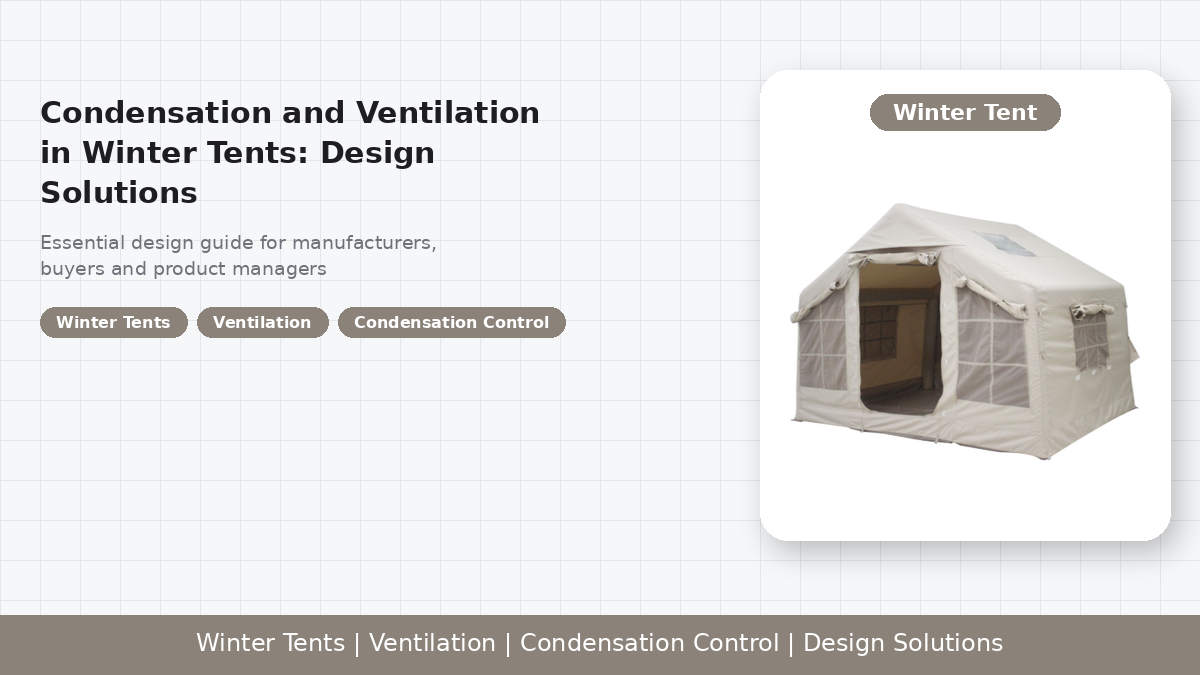
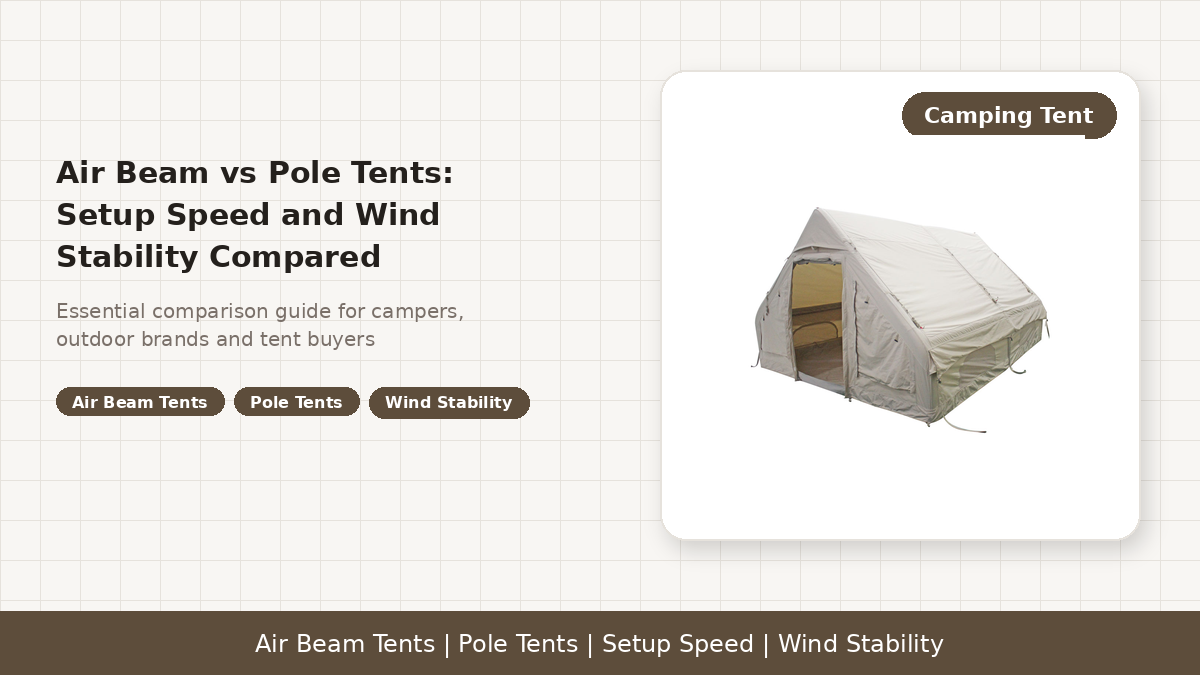
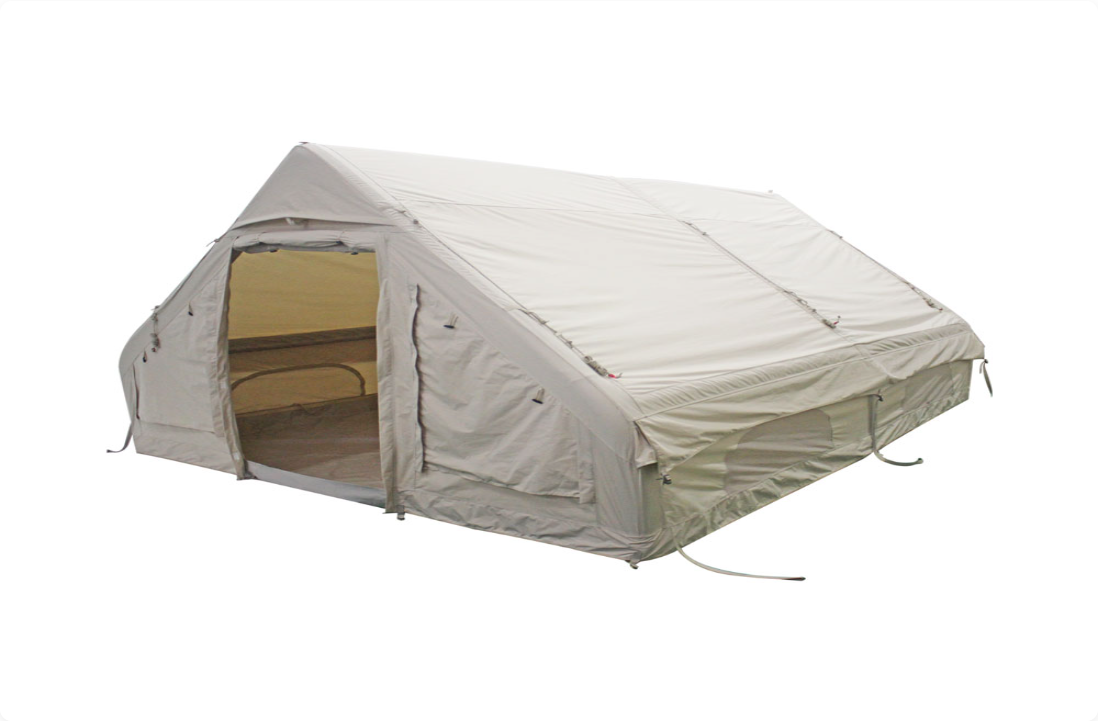
An Inflatable Tent uses cylindrical air beams — pumped up with an electric or foot pump — as the structural members that hold the tent's shape. These beams are typically PVC or high-tenacity polyester Oxford, welded at joints and fitted with valves for inflation and deflation. Unlike metal pole structures, air-beam tents have no rigid frame components that can bend, snap, or go missing during packing.
Multi-room configurations add internal partition walls — sometimes full-height to the ceiling, sometimes partial dividers that create visual separation while maintaining air circulation. The partitions are sewn into the inner tent and rise with the air beams during inflation, so the entire tent goes up in one coordinated step. The REI’s expert camp site setup guide provides additional orientation and ground preparation tips that complement the tent manufacturer’s setup instructions.
The QIAHE inflatable tent range includes multi-room configurations from 4-person to 12-person capacity, from straightforward 2-room layouts to branching designs for longer base-camp setups. Field-tested by families, festival campers, and disaster relief organizations globally, these structures are backed by European Camping Union quality guidelines for recreational camping equipment.
Popular Family Layout Configurations
The best layout depends on family composition, typical trip duration, and primary use location.
The 2-Room Hub-and-Spoke is the most common family configuration — one main sleeping room (typically 3m x 3m or larger) with a secondary room of similar size separated by a zippered partition, used as a changing area, gear store, or second bedroom for children. This layout fits standard campground pitches (6m x 6m maximum common in Europe and North America) and sets up in a single inflation sequence.
The 3-Room Linear Layout adds a third space — typically a covered vestibule or entrance tunnel that functions as a wet gear zone. Families with older children appreciate the privacy this configuration delivers: parents in one room, teenage children in another, gear and wet clothing in the third.
The Central Living Room Design places a larger open living/dining area in the centre, with sleeping rooms as side chambers. This configuration works best for families who spend more time inside the tent during rainy days.
The Base Camp Configuration is a larger structure (often 6m x 6m or larger) with four or more internal divisions. These are suited to extended stays at established campgrounds where the tent functions as a temporary home — with enough room for camp chairs, a table, and multiple distinct zones.
Materials: What Family-Grade Air-Beam Tents Are Made From
Material quality is the primary differentiator between a tent that lasts three seasons and one that performs for a decade. Key specifications:
Outer fabric (fly sheet):150D Oxford polyester with a polyurethane (PU) coating is the industry standard for family Camping Inflatable Tents. The D-number denotes thread thickness; 150D strikes a balance between weight and durability for regular camping use. PVC tarpaulin is the premium option — heavier but with superior waterproofing and abrasion resistance for extended-season use.
Inner tent fabric: Oxford mesh or 190T polyester taffeta. Mesh provides superior ventilation in warm conditions; solid taffeta performs better in cooler conditions where condensation is a concern.
Air beams: PVC-coated polyester Oxford is the dominant beam material. Beam wall thickness is the critical specification — thicker walls resist punctures from stones and rough handling. Quality beams have welded seam joints rather than glued joints, which resist delamination over time.
Floor material: 150D Oxford with a 10,000mm waterproof coating is the standard for quality family tents. The floor should be fully sewn to the inner tent walls at the perimeter, not just taped. As the NPS camping gear guide confirms, floor fabric weight and coating thickness are the two most reliable predictors of long-term waterproof performance in family tents.
Weather Performance: What Multi-Room Inflatables Can Handle
Multi-room Inflatable Tents have a fundamentally different relationship with wind compared to pole-frame structures. Air beams are flexible cylinders that flex in gusty conditions rather than concentrating stress at joint intersections the way metal poles do — which is why many experienced campers consider air-beam tents more storm-resilient than equivalent pole structures.
No tent is immune to wind damage. The critical specifications are the hydrostatic head (waterproof rating) and the wind rating: minimum 3,000mm hydrostatic head and 40-50 km/h wind rating for the main beams. PVC structures achieve higher ratings at the cost of increased weight.
As the National Park Service camping safety guidelines emphasize, all tents must be properly guyed in exposed locations — driving guylines at all designated attachment points and checking tension after wind events.
Setup Time and Process: What to Expect
One of the strongest selling points of Inflatable Tents is setup speed: a 2-room family Inflatable Tent inflates in 10 minutes with an electric pump, versus 30-45 minutes for an equivalent pole-frame tent.
The setup sequence: lay out the tent and orient it correctly, connect the pump and inflate main beams to rated pressure, inflate partition beams, stake the base perimeter, attach guylines, then deploy the rainfly. The most common setup error is under-inflation — beams that are not fully inflated allow fabric to sag and flap, causing premature wear and reduced wind resistance. Always inflate to the pressure specified on the beam valve or in the manual.
Multi-Room vs. Pole-Frame Tents: A Direct Comparison
| Specification | Multi-Room Inflatable Tent | Pole-Frame Multi-Room Tent |
|---|---|---|
| Typical setup time | 10-25 minutes (electric pump) | 30-50 minutes |
| Structural failure mode in wind | Beam flexes; rebounds when gust passes | Pole bend or joint crack; potential sudden collapse |
| Repair complexity | Patch kit for punctures; field-repairable | Pole splint required for pole break; more complex |
| Weight (4-person, 2-room) | 12-18 kg | 10-14 kg |
| Packed size | Medium — air beams don't compress fully | Compact — poles nest efficiently |
| Interior head height | Generous — wide arch beam structures | Varies by pole count and design |
| Seasonal durability | PVC: 5+ seasons; Oxford: 3-4 seasons | 3-5 seasons depending on fabric and pole quality |
The weight and packed size difference is the main trade-off: Inflatable Tents are typically 2-4 kg heavier because PVC air beams cannot compress as efficiently as nested aluminum poles. For car camping at established campgrounds, this is rarely significant. For backcountry or hike-in camping, a pole-frame tent remains more practical.
What to Look for When Buying: A Family Camping Checklist
Procurement Checklist for Multi-Room Family Inflatable Tents
- Capacity rating and actual floor space — buy rated capacity +2 (a 6-person tent for a family of 4); verify floor dimensions against your air mattress dimensions
- Beam pressure rating — confirm the rated inflation pressure and ensure your pump can reach it; most electric pumps rated at 5-7 psi are suitable
- Hydrostatic head (waterproof rating) — minimum 3,000mm for outer fabric; 5,000mm+ recommended for all-season or damp-climate use
- Seam construction — fully taped or welded seams on outer fabric; sewn (not taped) floor-to-wall junctions at perimeter
- Room height and livability — verify standing height in sleeping rooms (not just the central living area); partitions that don't reach the ceiling reduce privacy
- Door and ventilation configuration — multiple doors reduce traffic disruption at night; mesh panels with solid fly options provide flexible ventilation across seasons
- Gross weight and packed dimensions — confirm it fits in your vehicle with other gear; check carry bag dimensions against boot or cargo space
- Repair kit included — quality manufacturers include a patch kit for air beams and fabric; verify this is in the package before purchase
- Warranty and after-sales support — confirm the manufacturer or distributor provides spare parts (replacement valves, repair patches) and can support warranty claims in your market
For families evaluating QIAHE's multi-room Inflatable Tent configurations, theproduct page for the pump-inflate instant glamping tent series includes dimensional drawings, beam pressure specifications, and gross weight data. For custom configurations — including branded OEM orders for rental companies, adventure tour operators, or disaster relief procurement — contact QIAHE's sales team with your specifications.
Common Layout Mistakes to Avoid
Mistake 1: Buying to the headline person-capacity number. A 6-person rated tent fits 6 on sleeping pads, not on air mattresses or camp cots. Always check floor plan dimensions against your actual sleep system.
Mistake 2: Ignoring partition height. Some budget multi-room tents have partitions that stop short of the ceiling, creating the appearance of two rooms while sound, light, and drafts pass freely. Verify partitions reach the ceiling or are close enough that a pillow blocks the gap.
Mistake 3: Not verifying pump compatibility. Large tents with multiple beams need a pump that fills all beams without re-pressurizing. Check valve count and throughput against manufacturer specs before the trip.
Mistake 4: Skipping the seam inspection on first use. Transport can stress seam tape even from quality manufacturers. Do a full seam check on the first night in dry conditions, not when rain is already falling.
Frequently Asked Questions
What is a multi-room inflatable tent?
A multi-room inflatable tent uses air-beam poles instead of traditional metal poles to create a structure with two or more partitioned interior spaces. Families use separate rooms for sleeping, changing, or storage — privacy and organization that a single open-layout tent cannot offer.
How long does it take to set up a multi-room inflatable tent?
Most multi-room inflatable tents take 10-25 minutes with an electric pump. Larger configurations with three or more chambers may require 30-45 minutes. QIAHE's instant pump-inflate design reduces setup time versus equivalent pole-frame structures.
What materials are used in family-grade inflatable tents?
Family-grade inflatable tents typically use 150D Oxford polyester or PVC tarpaulin for the outer fly, with Oxford mesh or polyester taffeta for the inner tent. Air beams are PVC or high-tenacity polyester Oxford with welded seams; the floor is 150D Oxford with a 10,000mm+ waterproof coating.
How weather-resistant are multi-room inflatable tents?
Quality multi-room inflatable tents are rated for wind loads of 40-60 km/h and water column ratings of 3,000-10,000mm. PVC inflatable tents offer superior waterproofing in extended rain. All seams should be taped or welded; guylines and proper pegging are mandatory in strong wind regardless of tent type.
How do multi-room inflatable tents compare to pole-frame tents for family camping?
Multi-room inflatable tents set up faster and have no metal poles to puncture or misalign. Air-beam structures flex in wind rather than bend or snap, making them more forgiving in gusty conditions. Pole-frame tents offer lighter weight and a wider range of freestanding configurations. For families who camp frequently at established campgrounds, an inflatable tent typically provides a better experience.
What is the ideal tent capacity rating for a family camping inflatable tent?
For family camping, select a tent rated for the total number of occupants plus two — a 6-person rated tent for a family of four. Multi-room configurations add internal partition bulk that reduces floor space per person. Always verify floor plan dimensions against your air mattress or sleeping pad sizes.
What maintenance is required for an inflatable tent?
After each trip, air-dry the tent completely before packing to prevent mold. Inspect air beams for micro-abrasions and patch punctures with the repair kit before the next use. Clean fabric with lukewarm water and a soft brush — never machine wash. Store uncompressed in a dry environment.
Can multi-room inflatable tents be used for purposes other than camping?
Multi-room inflatable tents are widely used for backyard sleepovers, beach shade structures, festival camping, emergency disaster relief housing, and event marquee setups. Their quick deployment makes them suitable for any application requiring rapid temporary shelter. QIAHE manufactures custom OEM configurations for disaster relief agencies and event rental companies.
Conclusion
The multi-room inflatable tent delivers convenience and capability simultaneously. Air-beam construction eliminates the most common frustrations of traditional multi-room camping: slow setup, complex pole management, and the vulnerability of metal joints to wind damage. For families who camp more than twice a year, the investment typically pays for itself in reduced setup frustration and improved trip comfort within the first season.
The layout decision — 2-room, 3-room, or base camp — should follow from the family's actual usage pattern. Shorter weekend trips favor the 2-room hub configuration for its speed and simplicity. Extended stays or multi-generational groups benefit from the larger base camp designs. The QIAHE pump-inflate multi-room tent range provides options across this spectrum, with OEM and custom configurations available for commercial buyers including rental operators, event companies, and disaster relief organizations.