











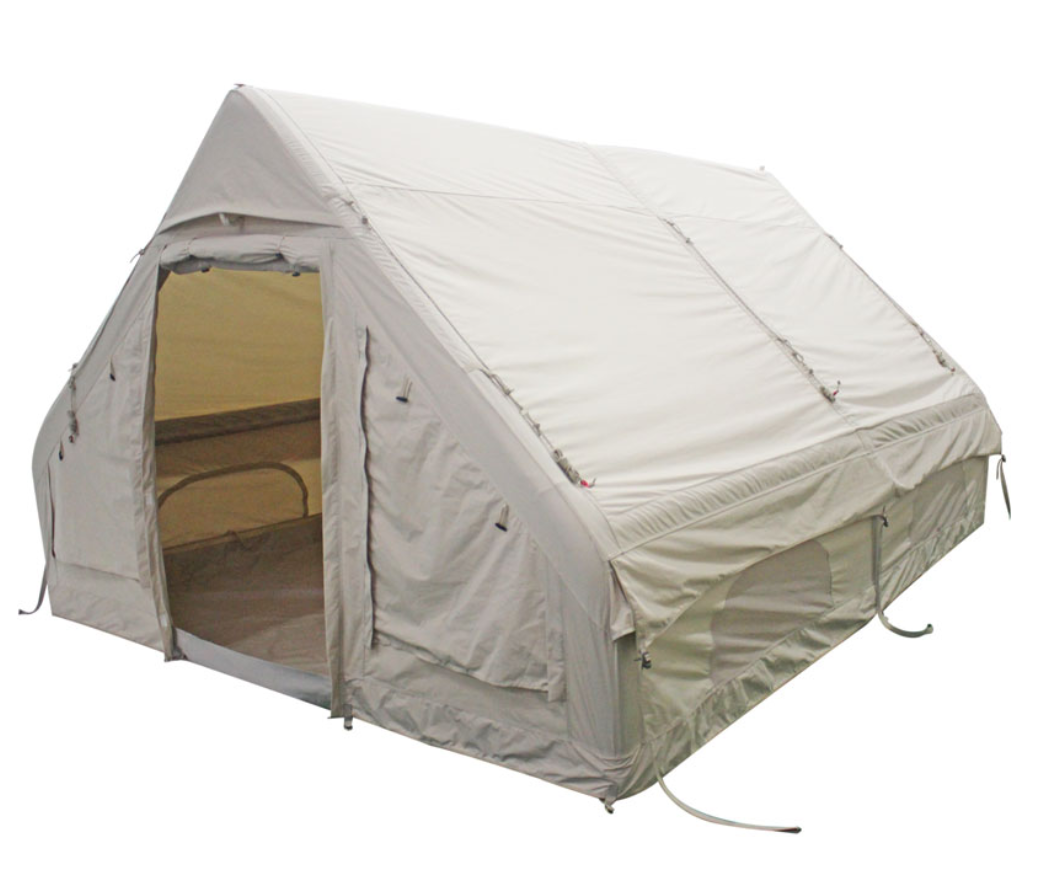
Inflatable Tents have changed camping and outdoor events more in the last five years than pole tents did in the previous fifty. The setup time is minutes, the structural feel is solid, and the failure modes are mostly invisible — which is exactly why "why is my tent soft in the morning" is the most common support question a serious Inflatable Tent brand will see. The answer is almost always one of three things, and the right one is findable in under thirty minutes by anyone who knows the routine.
Twenty years in outdoor product manufacturing has taught me that pressure loss is the kind of problem where the wrong fix costs more than the right test. A buyer who replaces a beam because of a valve leak has spent a hundred times more than the cost of a valve replacement. A buyer who tightens a valve because of a seam leak has spent nothing on the real problem. This guide is the field routine I share with the dealers, distributors, and end customers who run QIAHE tents in the field, and the routine I use myself when a tent arrives at the shop with a "morning deflation" complaint.
The three causes, in plain language
Almost every "morning deflation" report falls into one of three categories. The categories behave differently, fail at different rates, and have different fixes. The first step in any pressure-loss diagnosis is to put the symptom into one of the three buckets before reaching for a tool.
Answer nugget: Three causes cover almost every case: temperature-driven pressure drop, slow diffusion through the TPU or PVC bladder, and a real leak at a valve, seam, or abrasion point. The first is physics and reversible; the second is normal and small; the third is what field tests are designed to find.
Cause 1 — temperature-driven pressure drop. Gas pressure is a function of temperature. A tent inflated to 7 PSI on a warm afternoon will read 5.5 PSI on a cold morning, with no leak at all. The drop is predictable, reversible, and is not a defect — it is the air doing what air does. The fix is operational, not technical: set the tent early, let the air equilibrate to ambient temperature, and re-top to working pressure before the overnight drop.
Cause 2 — slow diffusion through the bladder. Every inflatable bladder, whether TPU or PVC, loses a small amount of air through the bladder wall itself. The rate is slow, predictable, and a function of the material, the wall thickness, and the pressure differential. For most quality tents, the diffusion rate is well under 1 percent of working pressure per day, which is below the threshold the user notices.
Cause 3 — a real leak. The third cause is a real leak at a valve, a seam, an abrasion point, a T-joint, or a fabric puncture. The signature is a pressure loss that is faster than physics predicts, and that gets worse over time as the leak channel grows. This is the cause the field test is designed to find.
How much pressure loss is normal
The first question to ask on any "morning deflation" report is how much pressure was actually lost. A few percent per 8 to 10 hours, mostly driven by the overnight temperature drop, is normal and does not require a fix. A visible sag by morning is a sign of either a real leak or a setup that did not allow for the temperature drop.
Answer nugget:A few percent of working pressure per 8 to 10 hours is normal, mostly driven by the overnight temperature drop. The working pressure on most Air Tents is set with enough headroom that normal overnight loss does not require a top-up. A visible sag by morning is a sign of either a real leak or an over-inflated starting pressure.
The right way to size the "headroom" is to inflate the tent, let it equilibrate to ambient temperature, and check the gauge. If the working pressure is 7 PSI and the overnight low is 25 degrees below the afternoon high, the morning reading will be close to 5.5 PSI — which is still within the structural range of a properly designed tent. The user sees a soft tent because the gauge reads low, not because the structure is compromised.
A good field rule: if the tent is still standing and the structure feels right by morning, the pressure loss was probably normal. If the tent is sagging or a beam is folding, the pressure loss is too large to be normal and the field test is the next step.
The 30-minute field test, step by step
The field test is the same routine I have used in the shop and in the field for years. It finds the leak in almost every case, and it takes less than thirty minutes from the moment you decide to test.
Field test, step 1: Inflate the suspect beam to working pressure, close the valve, and let the tent sit for 10 to 15 minutes so the air temperature stabilizes. Note the starting pressure. The waiting time matters — air heats up when pumped, and pumping in direct sun adds another degree or two.
Field test, step 2: Wait another 10 to 15 minutes. Read the pressure again. A loss of more than a few percent over 10 to 15 minutes at stable temperature is a real leak, not diffusion and not temperature drift. The faster the loss, the bigger the leak.
Field test, step 3: Listen. A hissing sound is the easiest leak to find and the easiest to ignore in a noisy campsite. Move slowly along the beam, ear close to the surface, especially at the valves, T-joints, and any seam that sits against a hard surface.
Field test, step 4: Soap-and-water test. Mix dish soap and water in a spray bottle, spray along the seams, valves, and T-joints. Bubbles form and grow at the leak point within seconds. The soap test is the field standard for slow leaks.
Field test, step 5: Submerge test for hard-to-find leaks. If the soap test does not show a leak and the pressure is still dropping, deflate the beam and submerge the suspect section in a bathtub, a calm pond, or a bucket of water. Bubbles mark the leak point. The submerge test is faster and more reliable for the very small leaks that soap sometimes misses.
For a tent that has been in the field for a season or more, the most common finding is a valve that has collected grit or has lost its seal. A valve cleaning, a seal replacement, or a valve re-seat is almost always a ten-minute fix with a spare-parts kit. The second most common finding is seam abrasion on the underside of a beam, where the tent has been dragged over a hard surface. A patch kit and ten minutes restores the seal.
Why valves are the most common leak point
Valves and valve-to-beam interfaces account for the majority of field leak reports for a simple reason: they are the only moving part on an inflatable structure. The bladder itself is a sealed weld; the valve is a mechanical interface that has to open for inflation, close for pressure retention, and tolerate thermal cycling, grit, and operator handling.
Answer nugget: Valves and valve-to-beam interfaces account for the majority of field leak reports, followed by seam abrasion on the underside of the beams where the tent touches the ground or a hard surface. Beam-to-beam T-joints and zipper interfaces come next. The fabric itself is rarely the leak point on a well-built tent.
A well-designed valve on a quality Inflatable Tent is field-serviceable. The seal is a replaceable O-ring or gasket, the cap is a screw-on or bayonet that can be re-seated without tools, and the valve body is bonded to the beam with a weld that is stronger than the surrounding fabric. The failure modes are usually the seal (which wears and gets gritty) and the cap (which can be cross-threaded or over-tightened), not the valve body or the weld.
The right field habit is to carry a small valve-service kit — a spare O-ring, a small brush for cleaning, and a drop of silicone lubricant that is safe for the bladder material. The kit fits in a pocket, costs almost nothing, and resolves the most common field complaint in minutes. It is also the difference between a tent that lasts a season and a tent that lasts a decade.
The four leak signatures worth recognizing
Most field leaks fall into one of four signatures. Recognizing the signature narrows the search, and the field test confirms it.
Answer nugget: The four most common leak signatures are fast (more than 10 percent per hour), medium (a few percent per hour), slow (a fraction of a percent per hour, found only by submerge), and cyclic (pressure that drops on a temperature cycle and recovers on the next inflate). The first three are real leaks; the fourth is temperature drift.
Fast leaks are usually a valve that has failed open, a seam that has delaminated, or a puncture that has grown. The tent is uninflatable without continuous pumping. The fix is immediate — find the source, patch or replace, and reinflate. A fast leak that is not fixed within a few hours usually means the tent is no longer serviceable in the field.
Medium leaks are the most common field complaint. The tent inflates, holds for a few hours, then sags. The leak is usually a valve seal, a small seam separation, or an abrasion point on the underside of a beam. Soap-and-water finds the source in most cases, and a field repair kit handles the fix.
Slow leaks are the frustrating ones. The tent seems fine in the evening, slightly soft in the morning, fine again after a top-up, slightly soft the next morning. The leak is small enough that the soap test does not show it, and the user starts to suspect the bladder itself. A submerge test of each suspect section is the right next step; the slow leak is almost always at a valve, a T-joint, or a seam under the beam.
Cyclic pressure loss is the one that is not a leak at all. The pressure drops overnight and rises during the day, in step with the temperature. The fix is operational: re-top to working pressure in the morning, accept the lower working pressure at night, and adjust the inflation procedure so the tent is set up at ambient temperature rather than in the heat of the afternoon.
What a well-built inflatable tent looks like in the field
A good Inflatable Tent is not zero-maintenance, but it is low-maintenance. The two design decisions that determine whether a tent reaches its full field life are field serviceability and UV protection on the outer fabric.
Field serviceability means replaceable valves, patchable bladders, and a spare-parts kit that an end user can use without a factory service. A tent that requires a return-to-factory for every valve replacement is a tent that ends up in a landfill after the first field leak. The QIAHE inflatable tent range is built around field-serviceable valves and a spare-parts program, so the small leaks that happen in normal use stay field-repairable for the life of the tent.
UV protection on the outer fabric matters more than most buyers expect. The bladder is usually well-protected inside the tent structure; the outer fabric is what takes the UV exposure. The photo-oxidative degradation mitigationresearch behind the heavy gazebo line is the same principle that protects the Inflatable Tent roof: the right fabric treatment and the right UV package determine whether the outer cover reaches its full service life or fails first.
The morning routine that prevents most complaints
Most "morning deflation" reports can be avoided with a five-minute routine the night before. The routine is the same for every Inflatable Tent, and it is worth building into the field habit.
Morning routine: Inflate early, let the tent equilibrate to ambient temperature, top to working pressure just before the overnight drop, leave the pump accessible for a quick morning top-up if needed, and inspect the valves and the underside of the beams for any sign of grit, abrasion, or moisture. Five minutes the night before saves a half hour the next morning.
The routine is not glamorous. It is the kind of habit that looks redundant until the third night of a trip, when the temperature swings hard and the user is glad they topped up before bed. The same routine is what dealers and rental operators should train their staff on, because it is also the routine that distinguishes a customer who enjoys the tent from one who calls the support line.
For buyers evaluating a new Inflatable Tent line, the right first step is totalk to the QIAHE team with the duty cycle and the climate in mind. The morning routine, the field-service kit, and the valve replacement procedure are the three things that decide whether a tent is a one-season product or a multi-year product. All three are easier to plan before the first PO than to retrofit after the first field complaint.
FAQ
Why does my Air Tent lose pressure overnight?
Three causes cover almost every case: temperature-driven pressure drop, slow diffusion through the TPU or PVC bladder, and a real leak at a valve, seam, or abrasion point. The first is physics and reversible; the second is normal and small; the third is what field tests are designed to find.
How much pressure loss is normal in an air beam overnight?
A few percent of working pressure per 8 to 10 hours, mostly driven by the overnight temperature drop. The working pressure on most Air Tents is set with enough headroom that normal overnight loss does not require a top-up. A visible sag by morning is a sign of either a real leak or an over-inflated starting pressure.
How do I find an air beam leak in the field?
Inflate to working pressure, close the valve, wait 10 to 15 minutes for temperature to stabilize, then listen and feel along the seams, valves, and any abrasion points. Soap-and-water is the field standard for a slow leak. A submerging test in a bathtub or a calm pond is faster and more reliable for the small leaks that soap sometimes misses.
Can a temperature change alone flatten an air tent?
In extreme conditions, yes. A drop of 30 degrees Celsius overnight can drop a working pressure of 7 to 10 PSI into the sag range, especially if the tent was set up late in the day when the air was warm. The fix is to set the tent early, let the air equilibrate, and re-top to working pressure before the temperature drops.
What is the most common leak point on an inflatable tent?
Valves and valve-to-beam interfaces account for the majority of field leak reports, followed by seam abrasion on the underside of the beams where the tent touches the ground or a hard surface. Beam-to-beam T-joints and zipper interfaces come next. The fabric itself is rarely the leak point on a well-built tent.
How long should a TPU air beam last?
A well-built TPU or PVC air beam on a quality inflatable tent should last several seasons of regular use, with the limit usually set by UV exposure on the outer fabric rather than by the bladder itself. Field serviceability — replaceable valves, patchable bladders, spare seam tape — is what determines whether a small leak ends the tent's life or just a weekend.
A short field note from the workshop
The single best investment in inflatable tent ownership is a small field-service kit and the habit of using it. A spare valve seal, a small brush, a drop of the right lubricant, a patch kit, and ten minutes of attention at the end of a trip will handle the majority of field problems before they become a return-to-factory event. The kits cost almost nothing. The habit is what extends the life of the tent.
On the QIAHE side, the tents we see in the longest service are the ones whose owners treat the field-service routine as part of the trip, not as a repair. The tents that come back to us after a season with the original valves, the original beams, and a clean underside are the ones whose owners have read the manual once, kept the kit, and used it. The morning routine in this guide is the same routine our own staff uses on the test fleet, and it is the one we recommend to every customer who asks how to make a quality inflatable tent last.