




Private Label Outdoor Products: Branding, Packaging and Barcode Specs
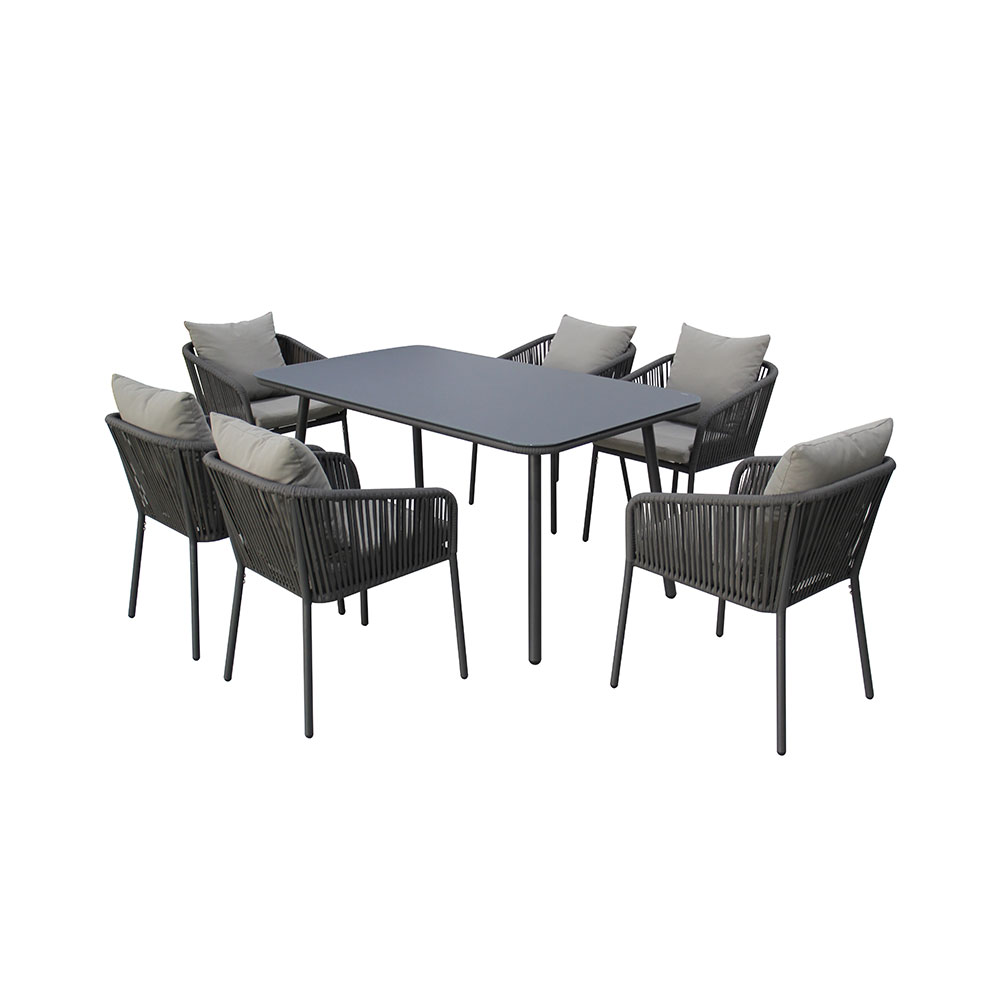
If you have ever walked into a garden center, a home improvement store, or a mid-sized e-commerce site and seen an outdoor furniture set or a pop-up gazebo with a brand name you do not recognize, there is a good chance that product was manufactured in China, Vietnam, or another lower-cost production region and sold under the retailer's own brand. That is a private label outdoor product, and the program that put it on the shelf is the same program I have been running with outdoor retailers across more than twenty years at QIAHE.
A private label outdoor products program is one of the highest-leverage moves a B2B outdoor retailer can make, because the gross margin on a private label product is typically 15 to 30 percentage points higher than the same product sold under a third-party brand. But the program is also unforgiving of specification errors, because every artwork mistake, every barcode misalignment, and every master carton dimension error compounds through the supply chain and shows up at the retailer's receiving dock as chargebacks, restocking fees, or refused deliveries. This guide is the operating manual I wish every new private label customer could read on day one: the branding file specs, the packaging dimensions, the barcode standards, and the lead times that make a private label outdoor program run cleanly from artwork approval to first shipment.
Why Private Label Matters in the Outdoor Products Market
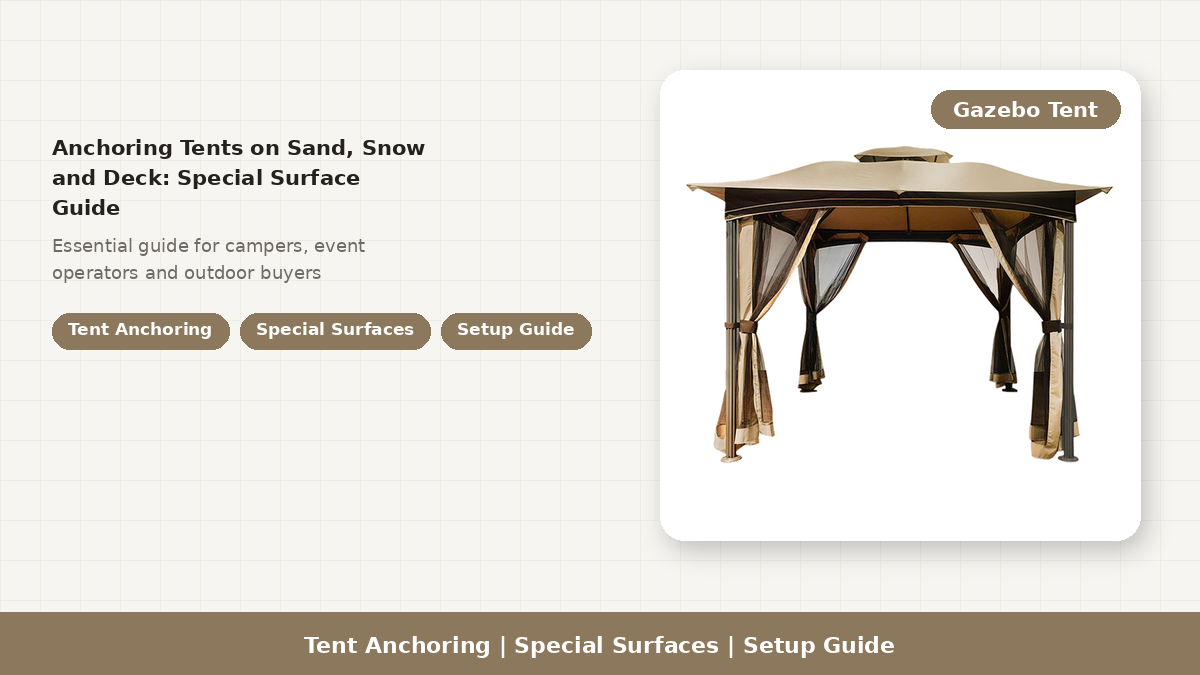
Private label matters in the outdoor products market because outdoor furniture, gazebos, and related shelter products carry enough SKU complexity and seasonal volatility that brand owners can extract a meaningful margin premium by selling under their own brand rather than a third-party label. A 2024 pop-up gazebo that retails at USD 250 to USD 500 has roughly USD 80 to USD 180 of built-in margin in a typical two-tier distribution chain, and roughly half of that margin is consumed by the brand premium a third-party label charges for the perceived value of its name. A private label program that replaces that third-party label with the retailer's own brand typically keeps USD 40 to USD 90 of additional margin per unit in the retailer's pocket, which on a 5,000-unit program is USD 200,000 to USD 450,000 of additional gross profit for a single SKU in a single season.
Three structural reasons make outdoor products a particularly good fit for private label:
- SKU complexity is high. A single outdoor furniture category can have 30 to 80 active SKUs across sizes, colors, and configurations. A retailer managing 100+ outdoor SKUs across 3 product categories has 300+ distinct items to source; private label lets them consolidate procurement under a single brand voice.
- Seasonal demand rewards inventory flexibility. Outdoor products have a 4 to 6 month selling window. A private label program lets the retailer adjust orders year to year without the constraint of a third-party brand's minimum commitments.
- Brand loyalty is product-driven, not label-driven. Consumers re-purchase outdoor products based on performance and price, not on whether the box says "Brand X" or the retailer's own label. The product experience matters more than the brand mark, which is the structural reason private label works in this category.
For a B2B buyer evaluating private label as a strategy, the practical question is whether the manufacturer's program can deliver the three things that determine whether a private label program succeeds or fails: correct branding files, correct packaging, and correct barcodes. Each is a separate engineering problem with its own specifications.
The Three Label Models: Private Label, White Label, and OEM
In the outdoor products industry, "private label" and "white label" and "OEM" are used interchangeably by buyers but mean three different things to a manufacturer, and the cost and lead time of each is different (see the private label industry overview). A buyer who does not understand the distinction can overpay for services they do not need, or specify a program that the factory cannot deliver at the quoted price.
| Model | What the Factory Does | What the Buyer Provides | Typical MOQ | Typical Lead Time |
|---|---|---|---|---|
| White label | Stock product, generic packaging, no customization | Nothing — ready to relabel | 1 to 10 units | 3 to 7 days |
| Private label | Stock product, buyer's logo and label applied to existing product | Logo, brand colors, label artwork | 50 to 200 units per SKU | 30 to 60 days |
| OEM / ODM | Custom product designed and built to buyer's specification | Product spec, logo, packaging, certification requirements | 200 to 1000+ units per SKU | 60 to 120 days |
Typical MOQs and lead times reflect a working range observed across the outdoor products industry in 2025-2026; specific values vary by SKU complexity and factory capacity.
For a B2B retailer deciding which model fits, the question is: do you have an existing product you want to put your brand on, or do you need a product that does not yet exist? White label answers the first question with the lowest cost and shortest lead time. Private label answers the first question with customization at moderate cost. OEM answers the second question with full design control at higher cost and longer lead time. A typical private label program is the right choice for a retailer with a defined brand identity and an existing product category, which is most B2B outdoor retailers in the USD 1M to USD 20M revenue range.
Branding 101: Logo Files, Color Codes, and Brand Book Standards
A private label program starts with the brand artwork, and the artwork must be delivered to the factory in a form that can be reproduced on a product label, a master carton, an instruction sheet, and a web listing photo, all from the same source file. A buyer who delivers a JPG logo at 72 dpi to a factory is asking for a production delay, because the factory has to redraw the logo in vector form before it can be printed on a box.
Three branding file requirements that every B2B buyer should know:
- Vector artwork in AI or EPS format. Adobe Illustrator (.ai) or Encapsulated PostScript (.eps) is the universal standard for factory artwork. The vector file contains the logo as mathematical curves that scale infinitely without pixelation. A PDF saved from Illustrator is usually acceptable as well. A JPG, PNG, or BMP is not acceptable for production because it is raster, and the factory has to redraw it, adding 1 to 2 weeks to the lead time.
- Pantone color codes specified. The brand has a logo color that may look like red on screen but is actually Pantone 186 C. The factory needs the Pantone code to mix ink accurately. A color note that says "red" or "dark blue" is not specific enough; the factory will mix an approximation, and the printed result will not match the brand book. The buyer should provide Pantone Solid Coated (or Pantone Solid Uncoated) codes for every spot color in the logo.
- Color space specified as CMYK, not RGB. Computer screens show color in RGB; print machinery mixes ink in CMYK. A logo delivered in RGB will look different on screen than in print, and the factory has to convert it, with predictable color drift. AI and EPS files should be saved in CMYK color space with the Pantone equivalents noted in the file.
For outdoor products specifically, the brand artwork must also survive the outdoor environment. A label that uses light-fast inks and a UV-resistant laminate will hold its color for 2 to 3 years outdoors; a label that uses indoor inks and a paper substrate will fade to illegibility in 6 to 12 months. For products that ship in retail-ready packaging (rather than master cartons), ask the factory to specify the label substrate and ink set on the production sample so the artwork decisions are documented before the production run starts.
Packaging Specifications: Master Carton, Inner Box, and Retail Packaging
There are three packaging layers in an outdoor products private label program, and the difference between them is the difference between a B2B shipment and a consumer-ready product. A B2B buyer who orders the wrong packaging layer pays for either too much (retail-ready packaging when master cartons would do) or too little (master cartons when the retailer needs retail-ready).
Three packaging layers compared:
| Layer | What It Is | Typical Use | Cost Impact |
|---|---|---|---|
| Master carton (5-ply corrugated) | Plain brown shipping box with product packed inside, no retail printing | B2B shipment to retailer warehouse | Baseline cost |
| Inner box (printed or plain) | Individual product box, may be printed, may be plain | Inside master carton, holds single unit | Adds 5% to 15% per unit |
| Retail-ready box (full color print, retail graphics, UPC barcode) | Consumer-facing box, printed retail graphics, UPC barcode visible through window or printed on side | Direct-to-shelf in retail store or Amazon FBA | Adds 30% to 60% per unit |
For most B2B outdoor products, the master carton is the right packaging layer. The retailer receives the master carton, breaks it down, and either re-merchandises the product into their own retail packaging or displays the product in the master carton with a hangtag. Retail-ready packaging is reserved for products that ship direct-to-consumer, including Amazon FBA, where the box itself is the shopping experience.
Master carton specifications for outdoor products that matter to the buyer:
- 5-ply corrugated board, double-walled, ECT-32 or higher. A single-wall 3-ply master carton is acceptable for indoor furniture but is too weak for outdoor products that may be stacked, dropped, or stored in damp conditions during transit.
- Internal dimensions match the product packing plan. The factory should provide a packing plan that specifies how the product is folded, broken down, or nested inside the master carton. A master carton that is 20% too large wastes freight; a master carton that is 5% too small prevents the product from fitting.
- Master carton weight, including the product, must be under 50 kg gross for manual handling, or 25 kg for one-person lift in EU markets. A 60 kg master carton requires two-person handling and may be rejected by the retailer's receiving warehouse.
- Carton markings include buyer's SKU, quantity, country of origin, and FNSKU label (if Amazon FBA). The factory should print these on the carton side as part of the production run, not as a hand-applied sticker at shipping.
For a buyer with a defined private label program, the procurement specification is straightforward: 5-ply double-walled master carton, ECT-32 or higher, internal dimensions per the factory's packing plan, master carton weight under 50 kg gross, and master carton markings per buyer's SKU list. The factory quotation should specify all four.
Barcode Types Compared: UPC-A, EAN-13, GS1-128, and FNSKU
There are four barcode types a private label outdoor buyer will encounter, and they are not interchangeable: a product carrying the wrong barcode is rejected at the retailer's receiving dock, no matter how good the product itself is. The right barcode depends on the destination market, the retail channel, and the specific retailer's compliance requirements.
Four barcode types compared:
| Barcode | Encoding | Length | Use Case |
|---|---|---|---|
| UPC-A | 12 numeric digits | Fixed 12 digits | U.S. and Canada retail, Walmart, Target, Home Depot, Lowe's |
| EAN-13 | 13 numeric digits | Fixed 13 digits | EU, UK, Australia, Japan, and most non-U.S. retail |
| GS1-128 | Application Identifier + variable data | Variable, typically 20+ digits | Master cartons, pallets, shipping containers (not retail) |
| Amazon FNSKU | Starts with X00, alphanumeric | Variable | Amazon FBA shipments (Fulfillment Network Stock Keeping Unit) |
The relationship between these is hierarchical. A product sold on Amazon FBA in the U.S. typically needs both a UPC-A barcode (for the retail sale) and an FNSKU label (for Amazon's warehouse tracking). A product sold in the EU needs an EAN-13 barcode. A master carton shipped to a retailer's warehouse needs a GS1-128 barcode on the side for the retailer's receiving scanner.
For a private label outdoor buyer, the practical decision tree is:
- Sold in U.S. retail? Yes → UPC-A on the inner box. Add FNSKU label for Amazon FBA.
- Sold in EU retail? Yes → EAN-13 on the inner box.
- Both U.S. and EU? Most retailers use UPC-A and add a separate EAN-13 label, or use a GS1 Global Trade Item Number (GTIN) that can be encoded as either format.
- Master carton always needs GS1-128, regardless of the destination market, for the retailer's receiving dock.
A private label program that does not specify the barcode standards in the purchase contract is a program that will produce a product the retailer cannot sell. The factory needs to know which barcode goes on which packaging layer before production starts.
GS1 Registration: How to Get a Real, Scannable Barcode
A GS1 barcode is not a piece of artwork; it is a license that ties a unique 12-digit or 13-digit number to a specific company and a specific product, and the license costs money to obtain and renew. A buyer who tries to save money by using a random number or a "barcode generator" website will find the resulting barcode rejected at the retailer's receiving dock, because the retailer scans the number against the GS1 database and finds no match.
How GS1 registration works:
- Apply for a GS1 Company Prefix. The buyer applies at GS1 US (the GS1 standard body in the U.S.) for a company prefix, which is a unique 6 to 12 digit number that becomes the foundation of every barcode the buyer assigns. GS1 charges an annual fee based on the number of barcodes the prefix can generate, ranging from roughly USD 250 per year for a 10-barcode prefix to USD 3,500 per year for a 1,000-barcode prefix.
- Assign GTINs to your products. Using the GS1 company prefix, the buyer assigns a unique 12-digit (UPC-A) or 13-digit (EAN-13) Global Trade Item Number to each product. The GTIN is the actual barcode number, and each product gets a unique GTIN.
- Generate the barcode artwork. The buyer provides the GTINs to the factory, which generates the barcode graphic (the black-and-white bars) using GS1-compliant barcode generation software. The artwork is then placed on the inner box, retail packaging, and master carton as needed.
- Maintain the GS1 record. The buyer updates the GS1 database when products are added, removed, or have their specifications changed. The GS1 database is what the retailer's scanner checks against, so an outdated record will cause a rejection.
For a B2B buyer with a smaller private label program (under 50 SKUs), the GS1 US "small business" prefix at roughly USD 250 per year is sufficient. For a larger program (50 to 500 SKUs), the next tier at roughly USD 800 per year provides enough GTIN capacity. For programs over 500 SKUs, the larger prefix tiers are more cost-effective per GTIN.
For the Amazon FNSKU specifically, the buyer registers the product in Amazon Seller Central, and Amazon assigns a unique FNSKU that starts with "X00". Amazon then provides the FNSKU barcode artwork that the factory applies to the product. The FNSKU is in addition to, not instead of, the GS1 barcode: a product in Amazon FBA inventory has both a UPC-A (for retail sale) and an FNSKU (for Amazon warehouse tracking).
Retail-Ready Label Specifications: FBA, Walmart, Home Depot, Costco
Each major retail channel has its own label specification, and the specifications are different enough that a single product usually needs channel-specific label artwork rather than a single universal label. A private label program that ships to multiple channels must produce multiple label variants for the same product.
Channel-specific label requirements:
| Channel | Label Material | Barcode Placement | Other Requirements |
|---|---|---|---|
| Amazon FBA | White BOPP label, removable adhesive | Outside of product packaging, scannable from any side | FNSKU label, suffocation warning label, country of origin label |
| Walmart | White paper or BOPP label | Flat surface, not curved | UPC-A, GTIN-14 case code, country of origin, GS1-128 on master carton |
| Home Depot | White BOPP, smudge-proof | Primary display panel | UPC-A, made-in label, retailer SKU label, GS1-128 on master carton |
| Costco | White BOPP, large format for warehouse visibility | Primary display panel, large font | UPC-A, country of origin, item number, GS1-128 on master carton, pallet label |
| Target | White BOPP, removable adhesive | Primary display panel | UPC-A, vendor item number, country of origin, GS1-128 on master carton |
For a private label buyer selling across multiple channels, the practical solution is to specify a "channel set" of label artwork rather than a single label. The factory produces multiple label files (one per channel), and the production run includes the appropriate label file for each channel. The cost difference is usually 1% to 3% of the per-unit product cost — a small premium for a much broader retail reach.
Lead Times, MOQs, and Tooling Costs for a Full Private Label Program
A first-time private label outdoor program typically takes 30 to 90 days from artwork approval to first shipment, with MOQs between 50 and 200 units per SKU and one-time tooling costs between USD 300 and USD 2,000 for label printing plates. These are the four numbers a buyer should lock into the purchase contract before any production order is placed.
The four key numbers in a private label program:
- Artwork approval: 5 to 10 days. The buyer sends logo files and brand book; the factory returns a label proof; the buyer reviews and signs off. This is usually the bottleneck because the buyer needs to see the proof on a printed sample, not just on screen.
- Pre-production sample: 7 to 15 days. After artwork approval, the factory produces a single unit with the buyer's label applied. The buyer receives the sample, inspects it, and signs off. This step exists to catch label adhesion problems, color drift, and barcode scan failures before the full production run starts.
- Production run: 20 to 45 days. The factory produces the full order. For outdoor products with seasonal demand, the production run is usually timed to ship 30 to 60 days before the peak selling window.
- Shipping: 15 to 35 days. Ocean freight from China to the U.S. or EU takes 25 to 35 days. Air freight is faster (5 to 7 days) but 4 to 6 times more expensive. Most private label programs use ocean freight for the production run and air freight for samples and replenishment orders.
One-time tooling costs in a private label program are usually modest. Label printing plates (flexo or digital) cost USD 300 to USD 1,500 per SKU. Mold modifications for custom colors or logos on the product itself (rather than the label) cost USD 1,000 to USD 5,000 per mold. For outdoor products that use stock molds with applied labels (typically delivered in corrugated fiberboard master cartons per ASTM D4169 transit testing) (typically delivered in corrugated fiberboard master cartons per ASTM D4169 transit testing), the tooling cost is just the label plates. For products that need custom-molded components, the tooling cost is higher but the per-unit cost is lower at scale.
Quality Control and Compliance Documentation for Private Label
A private label program requires three documents that a branded-product program does not: a quality agreement, a private label specification sheet, and a sample retention policy. These documents protect both the buyer and the factory when a quality issue arises, and they are the difference between a chargeback that is recovered and a chargeback that is written off.
The three documents a private label program needs:
- Quality Agreement. A signed document that specifies the factory's QC responsibilities, the buyer's incoming inspection rights, the change control process, and the corrective action process for non-conformances. Most factories have a template; the buyer should review the change control and corrective action sections carefully because those are the sections that get tested when a quality issue actually occurs.
- Private Label Specification Sheet. A document that specifies the artwork files, color codes, label dimensions, label substrate, label adhesive, barcode format, and master carton marking for each SKU. The factory uses this as the production reference; the buyer uses it as the acceptance criteria. Any deviation from the spec sheet must be documented and approved in writing before production.
- Sample Retention Policy. A documented practice of retaining production samples for a defined period (typically 12 to 24 months) in case a post-shipment quality issue requires reference to the original production run. The retention sample is the legal record of what was actually shipped, and it is the buyer's strongest evidence in a chargeback dispute.
For a B2B buyer running a private label program for the first time, the procurement specification is straightforward: artwork files in vector format with Pantone codes, label substrate and adhesive specified, barcode format specified, master carton marking specified, and the three documents above signed before the first production order. The factory that is willing to sign all three is a factory that takes the program seriously; the factory that pushes back is a factory that wants the order without the accountability.
Procurement checklist (12 points)
- Vector artwork in AI or EPS, with Pantone codes specified. JPG or PNG files are not acceptable. A buyer who delivers a JPG logo to a factory is asking for a 1 to 2 week production delay while the factory redraws it in vector form.
- Color space specified as CMYK with Pantone equivalents. The factory should produce a printed color proof before the production run starts so the brand color is verified on the actual label substrate.
- Barcode standards specified per channel. UPC-A for U.S. retail, EAN-13 for EU retail, FNSKU for Amazon FBA, GS1-128 on every master carton. The purchase contract should specify which barcode goes on which packaging layer.
- GS1 company prefix registered and active. A random 12-digit number is not a valid GS1 barcode. The buyer must register with GS1 and maintain an active prefix before any barcodes are produced.
- Label substrate and adhesive specified. For outdoor products, white BOPP with removable adhesive and UV-resistant inks. Indoor paper labels fade to illegibility in 6 to 12 months outdoors.
- Master carton specifications: 5-ply double-walled, ECT-32 or higher, under 50 kg gross weight. Single-wall 3-ply cartons are too weak for outdoor product transit. Carton markings include buyer's SKU, quantity, country of origin, and channel-specific barcode.
- Pre-production sample required before production run. The factory produces a single unit with the buyer's label applied; the buyer inspects and signs off. This step catches label adhesion, color drift, and barcode scan failures before the full production run.
- Quality Agreement signed before first order. Specifies QC responsibilities, incoming inspection rights, change control, and corrective action. A factory that pushes back on the Quality Agreement is a factory that wants the order without the accountability.
- Sample retention policy documented. Production samples retained 12 to 24 months. The retention sample is the buyer's strongest evidence in a chargeback dispute.
- MOQ and lead time locked in the purchase contract. MOQ 50 to 200 units per SKU for most outdoor products. Lead time 30 to 90 days from artwork approval to first shipment. Any deviation from the contracted numbers requires written approval.
- Tooling costs specified up front. Label printing plates USD 300 to USD 1,500 per SKU. Custom-mold modifications USD 1,000 to USD 5,000 per mold. These are one-time costs and should be amortized over the first production run, not hidden in the per-unit price.
- Channel-specific label artwork. A product shipping to Amazon FBA, Walmart, Home Depot, and Costco needs 4 different label files, not 1. The cost difference is 1% to 3% of per-unit cost; the channel reach is dramatically wider.
That checklist is the same one I share with every first-time private label customer. It is not a customer-facing nicety; it is the minimum I would accept for a QIAHE private label program.
FAQ: Common Questions About Private Label Outdoor Products
1. What is the difference between private label, white label, and OEM?
White label is stock product with generic packaging, ready to relabel, with MOQs from 1 to 10 units and 3 to 7 day lead times. Private label is stock product with the buyer's logo and label applied, with MOQs from 50 to 200 units and 30 to 60 day lead times. OEM is a custom product designed and built to the buyer's specification, with MOQs from 200 to 1000+ units and 60 to 120 day lead times. Most B2B outdoor retailers are best served by the private label model.
2. What barcode do I need for an Amazon FBA shipment?
For Amazon FBA (Fulfillment by Amazon), the product needs both a UPC-A barcode (for retail sale) and an FNSKU label (for Amazon warehouse tracking). The buyer registers the product in Amazon Seller Central (see Amazon Seller Central FNSKU labeling help), Amazon assigns a unique FNSKU starting with X00, and the factory applies the FNSKU label artwork in addition to the UPC-A barcode. A product with only a UPC-A or only an FNSKU will be flagged by Amazon's receiving scan.
3. Do I need a GS1 company prefix to print barcodes?
Yes, for any retail sale. A random 12-digit number printed as a barcode is not a valid GS1 barcode and will be rejected at the retailer's receiving dock. The buyer registers a GS1 company prefix, assigns GTINs to products, and provides the GTINs to the factory for barcode generation. Annual fees range from USD 250 for a small prefix to USD 3,500 for a 1,000-barcode prefix.
4. What is the minimum order quantity for a private label outdoor product?
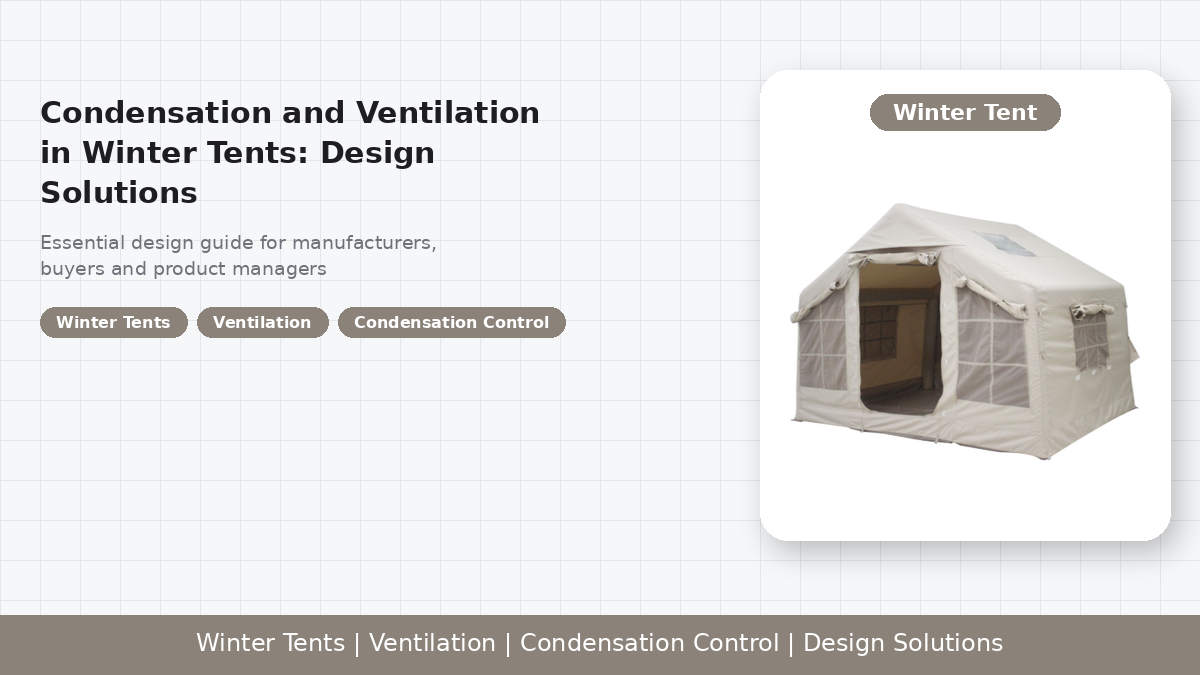
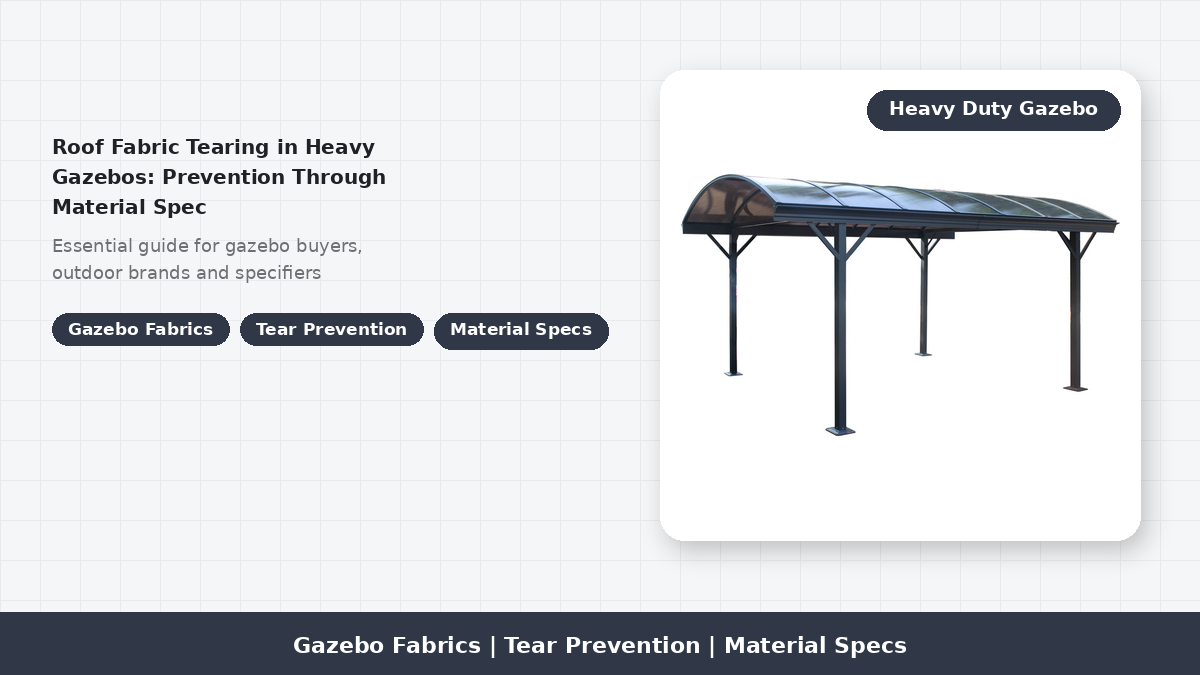
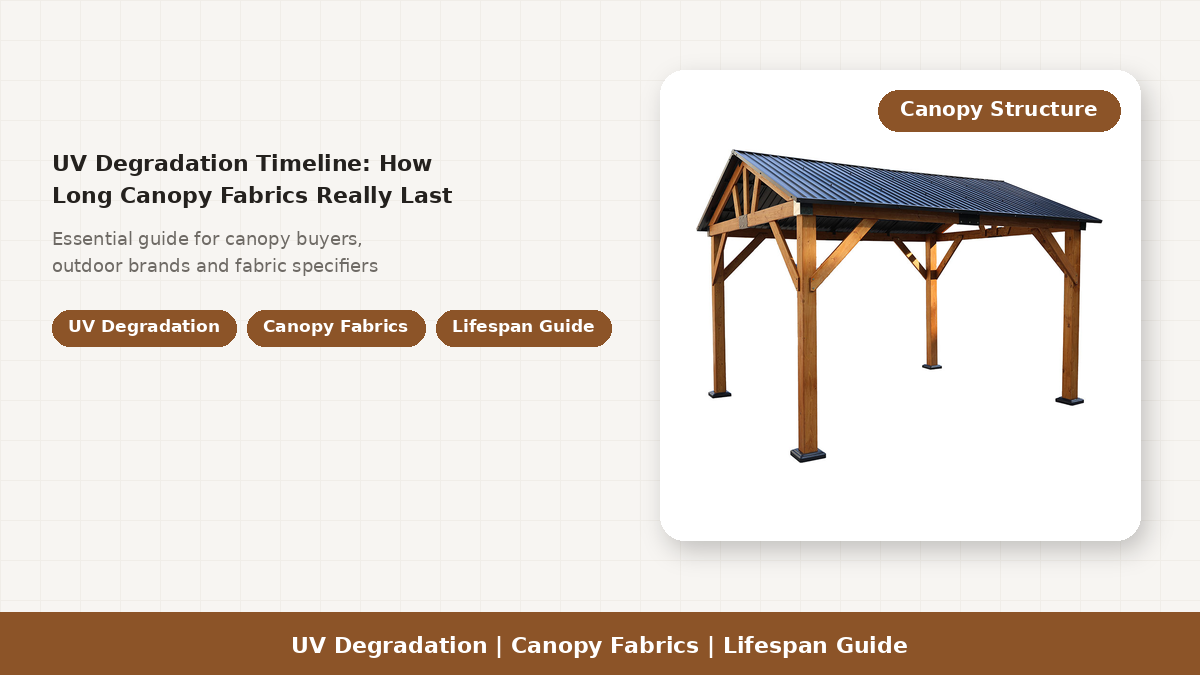
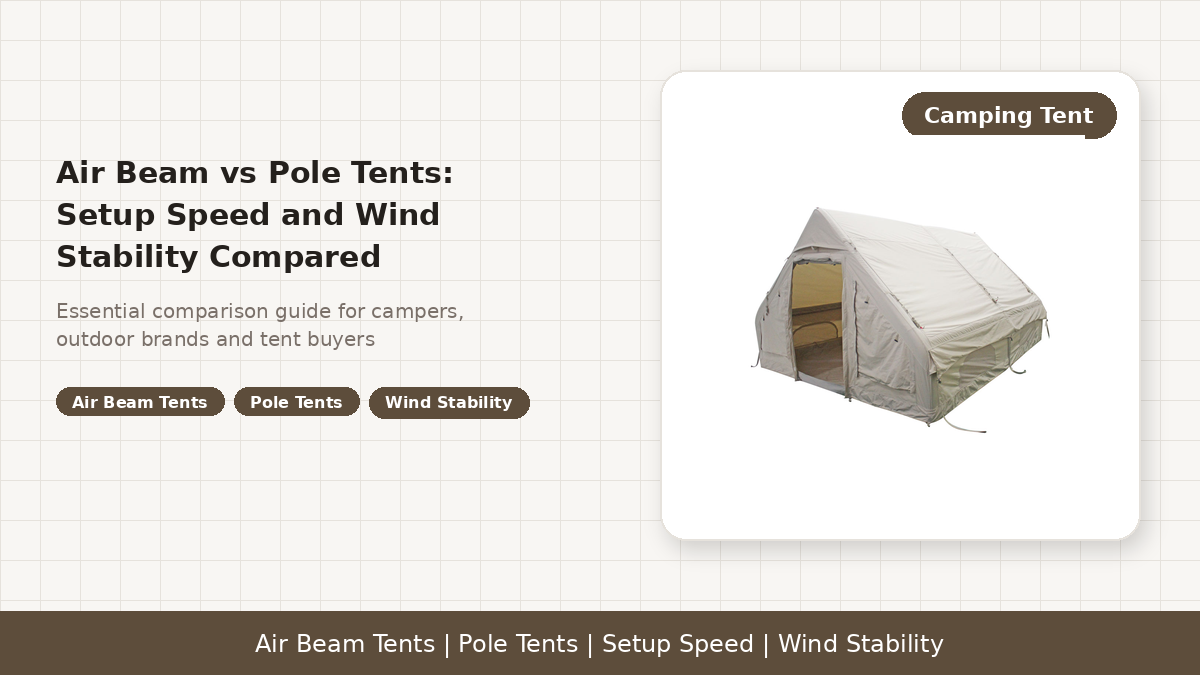
Typical MOQs for a private label outdoor product are 50 to 200 units per SKU, depending on the product category and the level of customization. Outdoor furniture sets, gazebos, and Inflatable Tents tend to have higher MOQs (100 to 200 units) because of the larger packaging and freight economics. Smaller items like umbrellas and awning accessories tend to have lower MOQs (50 to 100 units). The factory's MOQ should be documented in the purchase contract before any order is placed.
5. How long does a private label program take from artwork to first shipment?
A first-time private label program typically takes 30 to 90 days from artwork approval to first shipment. The breakdown is 5 to 10 days for artwork approval, 7 to 15 days for pre-production sample, 20 to 45 days for the production run, and 15 to 35 days for ocean freight to the destination market. Repeat orders with the same artwork and SKU list typically take 30 to 60 days total because the artwork and sample steps are eliminated.
6. Can I use the same label artwork for retail-ready boxes and master cartons?
No. The label artwork for a retail-ready inner box is different from the label artwork for a master carton, because the barcode placement, label size, and information density are different. A typical retail-ready label includes the UPC-A barcode, the product image, the brand mark, and the regulatory information. A typical master carton label includes the GS1-128 barcode, the buyer's SKU, the country of origin, the carton weight, and the channel-specific markings. The factory should produce two separate label files for any product shipping through both layers.
7. How do I know if my factory can deliver a private label program that meets my retailer's requirements?
Ask the factory for three specific things: a sample of their private label artwork for a similar product, a copy of their standard Quality Agreement, and a list of the retail channels they currently ship to. A factory that has shipped to Amazon FBA, Walmart, and Home Depot has already solved the label, barcode, and packaging problems for those channels. A factory that has only shipped to B2B distributors will need a longer onboarding period for a retail-channel private label program.
8. Where can I source private label outdoor products in bulk from China?
QIAHE has been manufacturing private label outdoor products for over 20 years, with a full product line covering outdoor furniture sets, awnings, carports, greenhouses, umbrellas, gazebos, and Inflatable Tents. Browse ouroutdoor furniture set product page for typical private label SKUs, or contact the QIAHE export team for a private label datasheet with MOQs, lead times, and the artwork file specifications your factory will need.
Next step: if you are evaluating private label outdoor product suppliers for a 2026 or 2027 program, request the QIAHE private label datasheet. It includes the OEM/ODM program scope across outdoor furniture, awnings, carports, greenhouses, umbrellas, gazebos, and Inflatable Tents, plus label and packaging specifications, MOQ tiers, lead times, and the artwork file format your factory will need before production can start.
© 2026 Ningbo Qiahe Outdoor Products Co., Ltd. · All rights reserved. · qiaheoutdoor.com