




Sourcing Polycarbonate Greenhouses from China: A Procurement Guide
Every month, two or three importers ask me the same first question: "We want to source polycarbonate greenhouse China, but we have no idea how to compare suppliers or what to verify before we wire the deposit." The reason the question keeps coming back is that the polycarbonate greenhouse category looks deceptively simple on the surface — a metal frame, a polycarbonate skin, some vents — and the real engineering is invisible until the first winter. A polycarbonate greenhouse is one of the few consumer products where the right procurement decision in October determines whether the importer has a warranty claim in March.
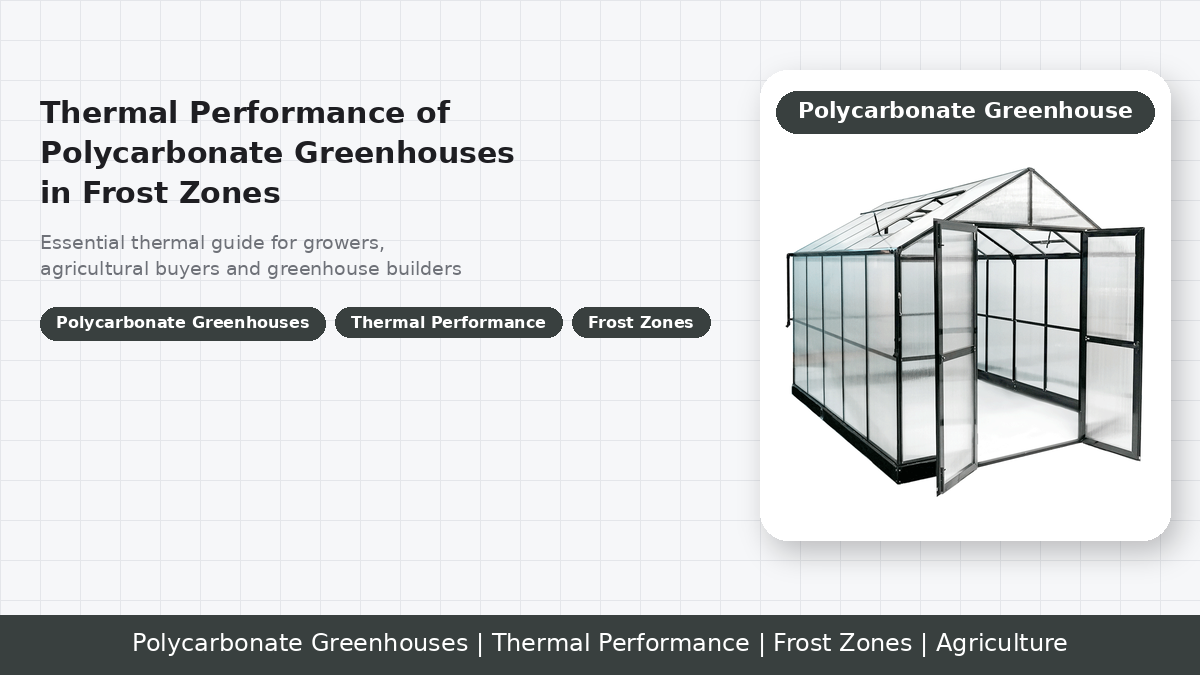
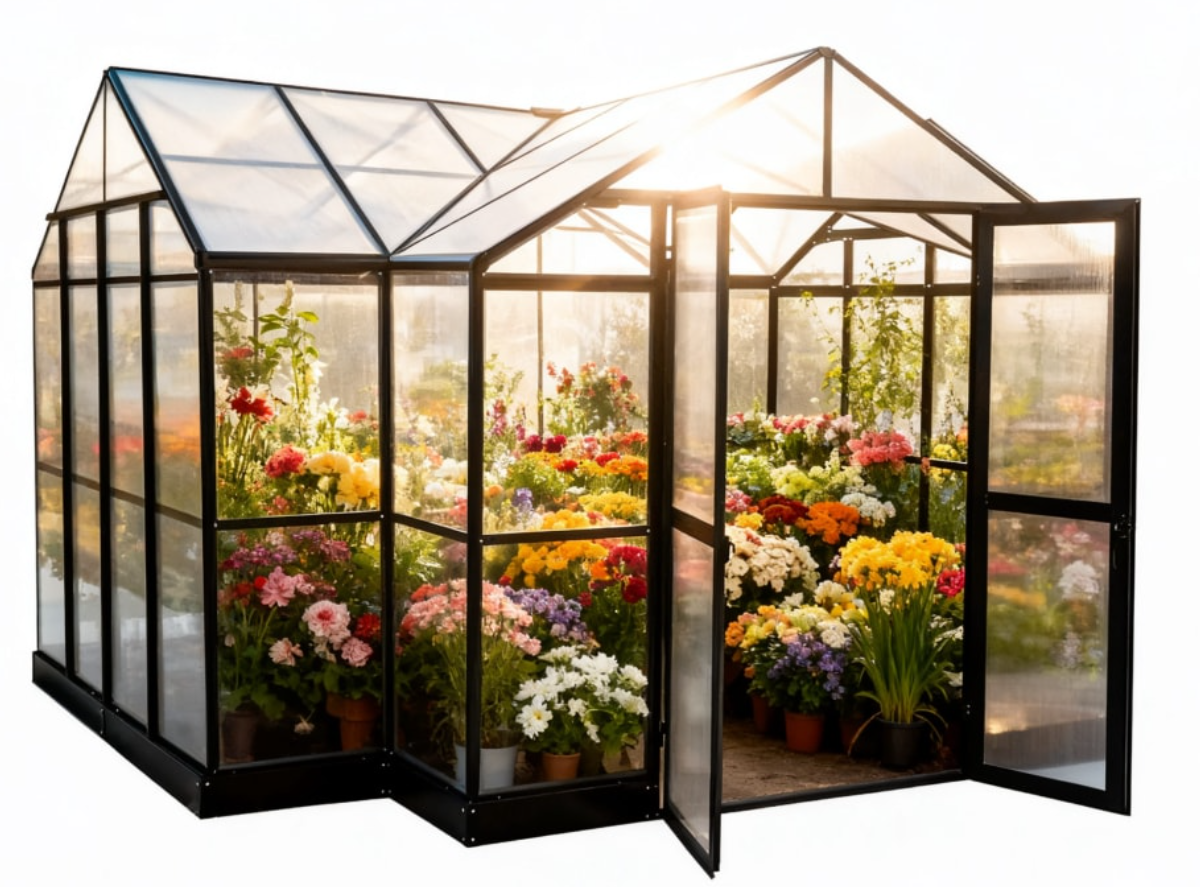
After twenty years of OEM/ODM manufacturing for outdoor structures at QIAHE — carports, awnings, gazebos, Inflatable Tents, and the full greenhouse line — I have watched first-time importers make the same handful of mistakes, and I have watched experienced importers avoid most of them. This guide walks through what a serious procurement plan looks like: the polycarbonate grades that actually matter, the structural-load ratings that determine whether the greenhouse survives the buyer's climate, the factory-qualification steps that distinguish a real manufacturer from a trading company, the sample-test program that protects the warranty, and the MOQ and logistics realities that shape the landed cost. The reference product throughout is apolycarbonate all-weather translucent greenhouse from our line, used to anchor the discussion to a real production configuration.
- For volume purchases, China-sourced polycarbonate greenhouses are typically cheaper than comparable EU/NA supply, but the savings shift downstream to logistics, inspection, and warranty.
- Sheet weight per square meter is a better quality proxy than nominal thickness.
- UV-exposure and light-transmittance testing are the two material tests that protect the multi-year warranty.
- Structural-load ratings (snow and wind) must be verified against the importer's actual climate, not a generic spec.
- Sample-test programs and pre-shipment inspection are non-negotiable; "trust the factory" is not a procurement strategy.
Why China, and What Are You Actually Comparing?
China is the dominant manufacturing base for polycarbonate greenhouses at the consumer and light-commercial price points, and it is increasingly competitive at the higher-end commercial and institutional tier. The cost advantage is real and structural — lower labor cost, large factory scale, and a mature polycarbonate-sheet supply chain that domestic European and North American suppliers do not match. The cost advantage is also not as simple as it looks on a per-unit basis, because the savings move downstream as the procurement cycle progresses.
The right comparison for a serious importer is total landed cost, not factory FOB price. Total landed cost includes:
- Factory FOB price. The unit cost at the Chinese port of origin.
- Ocean freight. The freight cost from the Chinese port to the importer's destination port, including surcharges for fuel, security, and peak season.
- Duty and customs. The applicable import duty rate in the destination country, plus any anti-dumping or safeguard measures that may apply to specific HS codes.
- Inspection cost. The cost of pre-shipment inspection, whether done by the importer's own team, by a third-party inspection company, or by an in-country sourcing agent.
- Warranty exposure. The expected cost of warranty claims, including replacement parts, freight, and the labor to repair or replace defective units in the field.
The cheapest factory FOB price often produces the highest total landed cost, because the warranty exposure on a low-grade polycarbonate sheet or an under-spec frame is not visible at the factory gate. It shows up in the field.
What Categories of Chinese Suppliers Exist?
The Chinese polycarbonate greenhouse supply chain has three structurally different types of suppliers, and they behave differently at every stage of the procurement cycle:
- OEM/ODM manufacturers with their own factory and their own sheet supply. These are the suppliers an importer wants to qualify. They control the production schedule, the sheet grade, the frame tooling, and the QC process. Examples of this category in the broader outdoor-products space include the kind of integrated manufacturer QIAHE represents — 20+ years of OEM/ODM production across carports, gazebos, and greenhouses.
- Trading companies that source from one or more factories. These suppliers are useful for small MOQs and for consolidating mixed-container orders, but they add a layer of communication friction and they do not always control the actual production schedule.
- Small workshops with no in-house sheet supply. These suppliers can produce a custom frame and assemble a greenhouse with sourced sheet, but they cannot reliably control sheet grade or warranty terms. They are the right answer for very small custom batches, not for volume OEM programs.
What Polycarbonate Grades and Specifications Actually Matter?
Polycarbonate is a versatile engineering plastic, and the greenhouse category uses several different grades. The differences between the grades are not cosmetic — they determine the warranty, the structural performance, and the long-term appearance of the greenhouse. Five grades come up most often.
- Twin-wall polycarbonate, 6 mm. The default specification for backyard and hobby greenhouse walls and roofs in temperate climates. Two layers of polycarbonate separated by an internal rib structure, providing reasonable insulation at moderate cost. The right answer for most residential buyers.
- Twin-wall polycarbonate, 8 mm or 10 mm. A step up in insulation and stiffness, used in colder climates and in commercial or institutional greenhouses. The right answer when the climate drops well below freezing overnight.
- Solid (single-wall) polycarbonate, 3 mm to 6 mm. Clear, glass-like, used in lean-to greenhouses and in higher-end residential applications where the buyer wants the optical clarity of glass with the impact resistance of polycarbonate. Higher cost per square meter and lower insulation value.
- Multi-wall polycarbonate, 16 mm or thicker. Used in commercial and institutional greenhouses where insulation and structural performance dominate the spec. Heavier, more expensive, longer lead time.
- Recycled-content polycarbonate. Sold at a discount to virgin-grade sheet. Looks identical at the factory gate, but the UV stability and the long-term optical performance are lower. The single largest source of yellowing complaints on greenhouse imports.
The most-cited industry reference for polycarbonate sheet specifications is the ASTM International family of standards. For optical properties, ASTM D1003 covers haze and luminous transmittance, and for UV-exposure testing, ASTM G155 (xenon-arc) and ASTM D4329 (fluorescent UV) are the standard test methods. For flammability classification of plastic components, UL is the global reference.
| Polycarbonate Grade | Typical Application | Insulation Value | Warranty Expectation |
|---|---|---|---|
| 6 mm twin-wall | Residential backyard greenhouse | Moderate | 5–10 years UV warranty |
| 8–10 mm twin-wall | Cold-climate residential, light commercial | Higher | 5–10 years UV warranty |
| 3–6 mm solid | Lean-to, optical-clarity applications | Lower | 5–10 years UV warranty |
| 16 mm+ multi-wall | Commercial, institutional | High | 10+ years UV warranty |
| Recycled-content | Budget applications | Variable | Limited or none |
For the structural side of the spec — the snow load and wind load the greenhouse is rated for — the relevant reference standards are the ASCE structural load standards (ASCE 7 in the U.S., EN 13031 in the EU for greenhouse structures specifically). Importers selling into regions with heavy snow or high wind need to verify that the supplier's load ratings have been tested or calculated against the right standard for the destination climate.
How Do You Qualify a Chinese Factory Before Signing a PO?
Factory qualification is the part of the procurement cycle that most first-time importers under-invest in, and it is the part that determines whether the rest of the cycle goes smoothly. A qualified factory is a factory the importer has visited, has documented, and has run a sample batch through. An un-qualified factory is a factory the importer is trusting on the basis of an Alibaba profile and a WeChat conversation.
The qualification process has four stages, each of which gates the next:
- Document review. Business license, factory floor photos, ISO 9001 certificate (if claimed), production capacity statement, and a list of current OEM customers with permission to contact. For a Chinese factory this is the basic credibility filter.
- Sample request and sample evaluation. The importer requests samples, pays for the samples and the international courier, and runs the samples through an independent lab test on optical properties and UV exposure. The lab test is what protects the warranty — without it, the buyer is trusting the factory's claim on sheet grade.
- Factory audit (in-person or virtual). The importer or a third-party inspector visits the factory, walks the production line, verifies the production capacity claim, and inspects the incoming-sheet warehouse. A real manufacturer welcomes the visit; a trading company often cannot accommodate it.
- Trial order. The importer places a small trial order, runs pre-shipment inspection on the trial batch, and tracks the field performance of the trial units for at least one full season before committing to a large production run.
For the broader quality-management framework that the trial order should plug into, the NIST Manufacturing Innovation program and the NIST Material Measurement Laboratory are the most authoritative U.S. public references on manufacturing process capability and on the testing methods that should appear in a serious supplier-qualification program.
What a Serious Sample Test Program Looks Like
The sample test program is what converts a supplier claim into a buyer-verified specification. The minimum program that protects the warranty on a polycarbonate greenhouse has four components tests:
- ASTM D1003 haze and luminous transmittance. The sample is tested for total light transmittance and haze. The result tells the buyer whether the sheet is delivering the optical performance the importer is promising to the end user.
- ASTM G155 or D4329 UV exposure. The sample is exposed to accelerated UV under a xenon-arc or fluorescent-UV apparatus for a defined duration. The post-exposure haze and transmittance are measured and compared to the pre-exposure values. This is the test that simulates multi-year UV exposure in months.
- Sheet weight per square meter. The sample is weighed on a calibrated scale. The result is compared to the supplier's nominal specification. This is the test that catches under-thickness sheet from a budget supplier.
- Drop or impact test. A simple impact test on a sample piece confirms the impact resistance claim. Useful as a basic sanity check on a budget supplier's polycarbonate grade.
What Are the MOQ, Production, and Logistics Realities?
For most importers, the procurement cycle on a polycarbonate greenhouse is dominated by the production and logistics lead time more than by the unit price. Three realities shape the cycle:
- MOQ by product class. Stock sizes can ship from very small order quantities, sometimes a single carton. Custom sizes, custom colors, and custom branding usually require a minimum production batch that covers the line setup cost. The right MOQ question is not "what is your MOQ" but "what is your MOQ at the price you are quoting" — the two answers can be very different.
- Production lead time. For a stock design, production lead time from PO to factory-ready is typically a few weeks. For a fully custom OEM run with new tooling, the lead time extends by the tooling build itself, which can add several weeks on top of the production run.
- Ocean freight. Ocean freight from major Chinese ports to the U.S. or EU adds several weeks on top of production, depending on the routing and the carrier. For tight seasonal windows (the spring planting season in the northern hemisphere, for example), the freight lead time can be the binding constraint.
For importers managing the freight leg specifically, the U.S. Commercial Service country commercial guides are the most authoritative public source on logistics and customs requirements in each destination market, and the U.S. Customs and Border Protection is the right reference for U.S. import procedures and HS code classification. For the broader trade-policy picture, the Trade.gov industries portal maintains current sector-by-sector guidance.
What About Warranty and After-Sales Support?
The warranty term is the supplier's written promise, but it is only as good as the supplier's ability to honor it. Three questions determine whether a warranty is real:
- Does the supplier have spare-part inventory? A supplier without stocked replacement parts cannot honor a warranty claim without a long factory lead time, which is its own kind of warranty failure.
- Does the supplier have a documented claim process? A claim process that requires the importer to email a WeChat contact with photos is not a process; it is an ad hoc arrangement.
- Does the supplier's warranty term align with the importer's retail warranty? A five-year sheet warranty from the factory supports a five-year retail warranty from the importer. A one-year factory warranty does not.
What Buyers Most Often Overlook
Three things repeatedly catch even experienced first-time importers off guard when they are sourcing polycarbonate greenhouses from China. None of them are exotic; they are the questions that don't get asked until the container is already at the destination port.
- The frame material specification. Aluminum frames are lighter, more corrosion-resistant, and carry longer warranties than powder-coated steel. In coastal or humid environments, the frame material is a meaningful warranty and performance variable. Verify the frame alloy and the powder-coat specification, not just the nominal frame size.
- The seal and gasket system. Polycarbonate sheets are joined with rubber or silicone gaskets and aluminum profiles. The seal system is what keeps water and air infiltration at bay over the life of the greenhouse. A budget seal system fails within two years; a serious one lasts the full sheet warranty period.
- The instruction manual and the spare hardware bag. A serious OEM includes a printed or printed-and-bound instruction manual with the order, plus a spare hardware bag with the small parts that get lost on every install. A budget OEM ships loose hardware in a plastic bag and assumes the importer knows how to install. The difference shows up in the importer's customer-service call volume.
Talk to QIAHE About Your Polycarbonate Greenhouse Project
Share your target size, climate, sheet thickness, and frame material preference, and QIAHE will spec an OEM/ODM polycarbonate greenhouse with sample documentation and pre-shipment inspection against your spec. Browse our greenhouse collection or request a quote directly.
Request a QuoteFrequently Asked Questions
For most volume purchases, sourcing from a Chinese manufacturer delivers meaningful cost savings over comparable European or North American supply, primarily because of lower labor cost, larger factory scale, and the maturity of the polycarbonate sheet supply chain in China. The savings are real but they shift downstream — they move from unit price to logistics, to inspection, and to warranty risk. The right comparison is total landed cost including freight, duty, inspection, and warranty exposure, not just the factory FOB price.
For a typical backyard polycarbonate greenhouse in temperate climates, 6 mm twin-wall polycarbonate is the most common specification for the walls and roof, with 8 mm or 10 mm used in regions with heavier snow load. Single-wall polycarbonate is rarely the right answer for year-round use because its insulation value is too low for overnight temperature stability. The right answer depends on your climate, your heating plan, and the structural ratings you need to hit.
The two material specifications that matter most are the polycarbonate sheet grade (virgin resin versus recycled, UV-stabilized versus not, twin-wall versus solid) and the actual sheet weight per square meter, which is a better proxy for quality than nominal thickness. A reasonable sample test program includes a third-party lab test on light transmittance and haze per ASTM D1003, and a UV-exposure test per ASTM G155 or D4329 if you are specifying a multi-year UV warranty. Without these tests, the buyer's warranty exposure is open-ended.
For OEM/ODM polycarbonate greenhouses, MOQ depends heavily on the size class and the customization depth. Stock sizes can ship from very small order quantities. Custom sizes, custom colors, and custom branding usually start in the tens of units for a serious OEM run, and can go into the hundreds for a fully custom-engineered product. The right question is not just MOQ but MOQ at the price the supplier is quoting — some suppliers will accept small orders at a premium, others require a minimum production batch to clear the line setup cost.
At minimum, the supplier should provide a mill certificate or material declaration for the polycarbonate sheet, a structural-load statement or test report for the frame, a sample inspection report from a production batch, and a documented warranty term. For EU shipments, REACH and RoHS declarations are effectively required for retail distribution. For U.S. shipments, a flammability classification per UL 94 is the right reference for plastic component ratings.
The polycarbonate sheet itself typically carries a UV-degradation warranty of five to ten years against yellowing and loss of light transmittance, with longer warranties offered by the better sheet suppliers. The frame warranty is usually shorter, often one to five years, and depends on the frame material (aluminum frames carry longer warranties than powder-coated steel in coastal environments). The structural warranty is a separate line and depends on local snow and wind load requirements.
Production lead time for a stock design is typically a few weeks from PO to factory-ready. For a fully custom OEM run with new tooling, plan for several weeks of tooling plus a few weeks of production, with the exact timing depending on the line availability at the factory. Ocean freight from major Chinese ports to the U.S. or EU adds several weeks on top of production, depending on the routing. Air freight is faster but rarely economical on a full greenhouse order.